
10 PCS PCI Slot Cover
4.6Editor score
Ten vented metal covers
Full-profile expansion fit
Dust and airflow balance
Explore the best PC Airflow Baffles for 2026, comparing mesh filters, PCI slot covers, magnetic panels, and airflow deflectors by fit, material, and cooling
PC airflow baffles help direct air through a computer while limiting dust, covering unused expansion slots, or protecting open vents. A useful baffle should fit cleanly, preserve the airflow your components need, and remain easy to remove for routine cleaning.
We compared ten baffles and airflow accessories across filter dimensions, mounting methods, mesh design, material, and intended installation area. The list includes magnetic case filters, DIY PVC mesh sheets, vented PCI slot covers, optical-drive front brackets, and a fan deflector.
Each selection highlights a different approach, from ready-made filters for common fan positions to cut-to-fit sheets for unusual case openings. Ratings and product details can change over time, so shoppers should confirm current specifications and case compatibility before purchasing.
4.6Editor score
4.7Editor score

4.5Editor score
This side-by-side comparison organizes all ten options by installation style, size, material, and airflow design, making it easier to match a baffle with your case layout and cleaning routine.





This two-piece optical computer chassis bracket is intended for compatible front-panel or optical-drive openings rather than general-purpose fan filtering. It combines a metal frame with sponge material, combining rigid support with a surface intended to reduce dust entry while allowing air to pass.
We may earn a commission when you buy through this link, at no additional cost to you.
The product's standout qualities are its compact dimensions of 15.8 by 4.3 centimeters and its layered construction. The metal frame supplies structure, while the sponge provides the filtering layer. Its lightweight design also makes the baffles manageable during installation or case maintenance, and the manufacturer describes the arrangement as space-efficient.
The principal limitation is that this is a specialized chassis accessory rather than a universal magnetic screen. Buyers need a front-panel or optical-drive opening with compatible dimensions and mounting points. Its 3.5 rating also suggests that fitment and overall satisfaction vary more than they do with purpose-made, fan-sized filters.
This is a sensible choice for builders filling an unused front opening, supporting an optical-drive arrangement, or seeking a simple sponge-and-metal barrier. It is less appropriate for users who want a tool-free filter for a standard intake fan. Confirm the opening, dimensions, and mounting requirements before selecting it.
The sponge layer can intercept airborne dust while the open structure of the metal frame avoids turning the entire opening into a solid blockage. The result is intended to preserve heat dissipation while keeping the covered area cleaner.
This baffle works best when the case has a compatible 15.8 x 4.3 centimeter front-panel or optical-drive opening. Precise measurement is more important than general size comparisons when selecting this type of accessory.
We may earn a commission when you buy through this link, at no additional cost to you.
This magnetic PVC mesh filter is sized at 280 by 140 millimeters, making it a strong candidate for dual 140mm fan positions, liquid-cooling radiators, and broad intake openings. Its 4.5 rating reflects a well-received balance of mounting convenience, washable construction, and a relatively open 0.8mm mesh.
We may earn a commission when you buy through this link, at no additional cost to you.
A 1.5mm reinforced magnetic frame gives the filter enough structure to stay attached, while 3M adhesive backing is intended to secure the frame to a suitable metal surface. The manufacturer states that the 0.8mm openings permit up to 30% better airflow than 0.5mm filters. Two filters are included, and the PVC mesh can be rinsed or brushed clean.
Fitment deserves careful attention. The filter is intended for metal or iron cases, and the product information notes that curved or unusual rounded corners may require trimming. It also cannot attach to a nonmagnetic surface in the same way. Those limitations are minor for the intended user but important before installation.
Choose this filter when you have a large case opening and want a durable, cleanable barrier without screws. It is particularly useful for a radiator or dual-fan intake where a narrow strip would be inconvenient. Measure the available area, confirm that magnetic attachment is suitable, and trim only where necessary.
The 280mm length covers more of a radiator or dual-fan area than a standard square filter. That broader coverage makes it practical where dust tends to accumulate around larger intake zones.
Because the mesh is washable PVC rather than disposable foam, maintenance is straightforward. Remove the filter, rinse it or brush it clean, let it dry, and return it to the magnetic frame.
We may earn a commission when you buy through this link, at no additional cost to you.
This ten-piece set of vented PCI slot covers protects unused expansion positions while maintaining a path for chassis air. Its 4.6 rating makes it one of the strongest all-around choices in the list, especially for builders who want more than one or two replacement plates.
We may earn a commission when you buy through this link, at no additional cost to you.
Each cover uses a hollow, vented metal design intended to limit dust infiltration without blocking heat dissipation. The full-profile, standard-height format is described as compatible with most MATX and ATX computer cases. At 12 by 2.25 by 1.4 centimeters, the plates also add a finished black appearance to otherwise open rear slots.
The trade-off is that these are expansion-slot covers, not front or top intake filters. Buyers must align each plate with the case's rear slot geometry and fastening method. Although the product claims broad compatibility, measuring the case and checking the number of unused slots remains sensible.
This set is an attractive option for a new build with several uncovered expansion slots, or for a system where dust has collected behind unused cards. It offers a generous quantity, metal durability, and vented airflow in one package. Verify standard full-profile compatibility before installation.
The vented structure addresses a common problem with solid expansion blanks: it reduces dust entry while still allowing the chassis to move air through the rear of the enclosure.
Ten plates make it easier to cover several open positions at once, including unused areas around a single installed card. That makes the set more versatile than a single replacement cover.
We may earn a commission when you buy through this link, at no additional cost to you.
This DIY filter uses two large PVC mesh sheets that can be cut to match nonstandard case openings. The 1000 by 300 millimeter format is exceptionally flexible, while eight included magnetic strips provide a way to secure the mesh without screws or drilling.
We may earn a commission when you buy through this link, at no additional cost to you.
The 0.5mm openings are designed to block dust, pet hair, and lint while maintaining ventilation. Magnetic attachment is straightforward on iron cases, and the product can also serve speaker grilles, game consoles, or other electronic equipment. Two sheets provide enough material for several openings or future replacements.
Unlike a factory-shaped filter, this product demands preparation. An imprecise cut can leave gaps, and the magnetic strips may need to be positioned carefully to stop curling or peeling. The sheets are also designed for metal cases, so they are less suitable for panels that cannot retain a magnetic attachment.
This is the right pick for unusual case designs, large irregular vents, or builders who want one material to service several openings. Measure each area, mark it carefully, and cut with sharp scissors. For standard fan positions, a purpose-sized filter will generally be faster to install and more consistent in appearance.
The generous sheet dimensions can cover front intakes, side vents, speaker grilles, and other openings. It is particularly useful when a case uses mixed vent shapes that would otherwise require several different filters.
Adhering the included strips to the mesh creates a removable attachment system. Once positioned, the filter can be taken down for cleaning without leaving permanent fasteners in the case.
We may earn a commission when you buy through this link, at no additional cost to you.
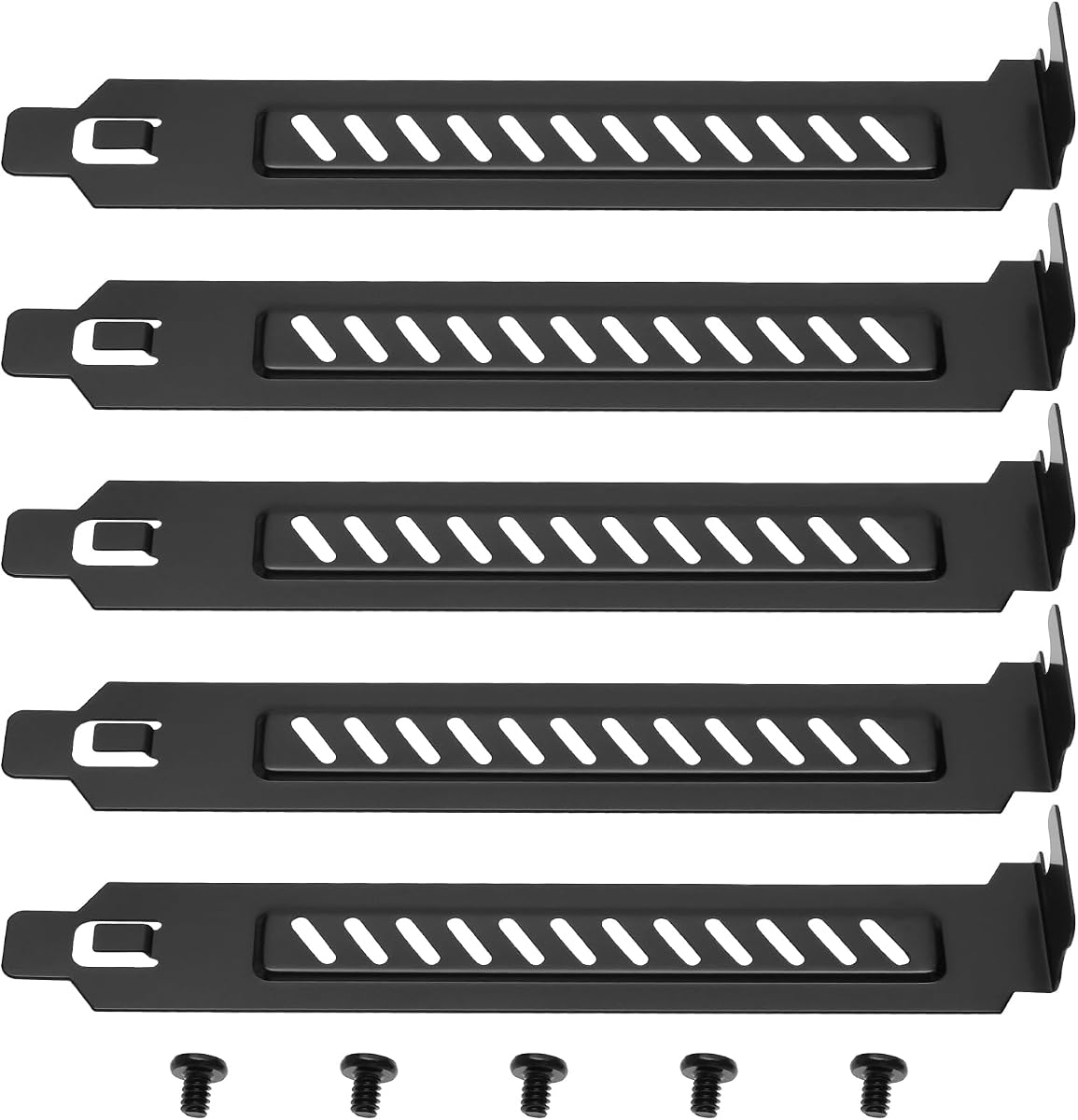
This five-piece alloy steel PCI slot cover set combines dust-conscious expansion-slot protection with a slanted ventilation pattern. Its 4.7 rating is the highest among the listed products, making it the strongest overall choice for a conventional desktop case with unused full-profile slots.
We may earn a commission when you buy through this link, at no additional cost to you.
The inclined holes increase the available ventilation area and are designed to help warm chassis air move away from components. Electroplated spray painting is intended to resist rust, while the 0.5mm-thick alloy steel provides a rigid plate that should retain its shape. Each cover comes with a screw for straightforward installation and removal.
The main limitation is quantity. Five covers suit a typical system with a moderate number of empty slots, but builders with more open positions may need another set. The stated dimensions of 120 by 20 by 12 millimeters also make fitment verification essential, particularly for cases with nonstandard expansion geometry.
This is our preferred general recommendation for a standard ATX or MATX desktop because it pairs useful ventilation, protective metal construction, and supplied fasteners without requiring modification. Check the slot dimensions and count the unused positions first. If they align, this set offers the strongest balance of features in the guide.
The slanted opening design is more than decorative. Its shape is intended to increase ventilation area and assist heat dissipation around the rear of the chassis.
Alloy steel gives the covers rigidity, while the plated finish helps protect against rust. Included screws allow each plate to be secured and removed as the system evolves.
We may earn a commission when you buy through this link, at no additional cost to you.
This four-pack targets the common 140mm fan position with a 140 by 140 millimeter magnetic PVC filter. The 4.5 rating and four-filter bundle make it a practical choice for systems with multiple standard 140mm intake or exhaust locations.
We may earn a commission when you buy through this link, at no additional cost to you.
A full-perimeter magnetic frame attaches to steel or iron surfaces without screws or case disassembly. The 0.8mm mesh is designed to balance airflow with interception of dust, pet hair, and lint. The washable PVC construction can be rinsed or brushed, dried, and reinstalled, avoiding the need for continually replacing foam.
The manufacturer notes that the case panel must be magnetic. Even a steel panel can have nonmagnetic coatings, sections, or shapes that prevent a secure fit, so testing the surface is advisable. Users may also need to adapt the square profile if their 140mm opening is partially obstructed.
This filter set is ideal for a clean build with 140mm fans and a preference for tool-free maintenance. Four panels provide enough coverage for several locations or convenient replacements. Confirm that the relevant panels are magnetic and that the filters can sit flat without interfering with nearby components.
The full magnetic perimeter allows the entire filter to be removed quickly. This makes it practical to inspect buildup and clean the mesh without opening up the rest of the case.
Four filters suit a case with multiple 140mm openings, or allow one to be kept in reserve. That makes the set more flexible than a two-filter package for larger builds.
We may earn a commission when you buy through this link, at no additional cost to you.
This 240 by 120 millimeter magnetic filter is designed for rectangular intake areas, radiator positions, and other elongated vents. Its two-filter pack and 4.5 rating make it an appealing option for builders who want a ready-sized solution without cutting a large mesh sheet.
We may earn a commission when you buy through this link, at no additional cost to you.
The 1.5mm reinforced magnetic frame combines with 3M adhesive backing to hold the filter against a compatible metal surface. Its 0.8mm holes are stated to provide up to 30% better airflow than 0.5mm alternatives while still blocking dust, lint, and pet hair. The durable PVC mesh can be rinsed with water or cleaned with a soft brush.
The product information includes an important caveat: curved or nonstandard rounded corners may need minor trimming. Magnetic attachment is also not universal across all case materials. Although the 240x120mm size is a common footprint, users should inspect the actual opening and surrounding frame before installation.
This is a strong recommendation for a standard rectangular vent that needs a tidy, removable barrier. It avoids the cutting and magnetic-strip preparation required by DIY sheets while retaining cleanable material. Measure first, test magnetic retention, and trim only the areas that prevent a flush fit.
The 240x120mm format suits elongated openings that do not align cleanly with a square fan filter. It provides a more finished result than a cut sheet on many standard layouts.
A thicker magnetic frame resists deformation, while the adhesive backing helps hold it against the case. The system remains removable for cleaning and can be repositioned during setup.
We may earn a commission when you buy through this link, at no additional cost to you.
This DIY PVC filter offers a single 1000 by 300 millimeter sheet for builders who need a custom shape. The included magnetic strips create a removable mounting system, and the 0.5mm openings are intended to limit dust and pet hair while retaining air permeability.
We may earn a commission when you buy through this link, at no additional cost to you.
The main advantage is adaptability. A single sheet can be measured and cut to fit a case opening that does not correspond to a common filter size, while the strips can be applied directly to the mesh. The product is also described as useful for gaming consoles, speaker grilles, and other electronic equipment.
Its 3.7 rating indicates more uncertainty than the higher-rated purpose-sized filters. Preparation is essential: a crooked cut can compromise coverage, and the magnetic strips must be attached to the correct side of the mesh. Only one sheet is included, so the amount available may be limiting for users with several large openings.
This is a sensible option for an unusual case opening or a temporary reusable barrier elsewhere. For standard 140mm or 240x120mm positions, a factory-shaped filter will usually be easier to position and more consistent. Use this product when customization matters more than a perfectly finished fit.
The large sheet can be cut to match irregular vents and openings that ordinary fan filters cannot cover. This makes it useful for unusual chassis layouts and DIY projects.
The four included strips attach to the mesh and then hold it against a suitable iron surface. Nothing permanent is drilled into the case, and the filter can be removed for cleaning.
We may earn a commission when you buy through this link, at no additional cost to you.
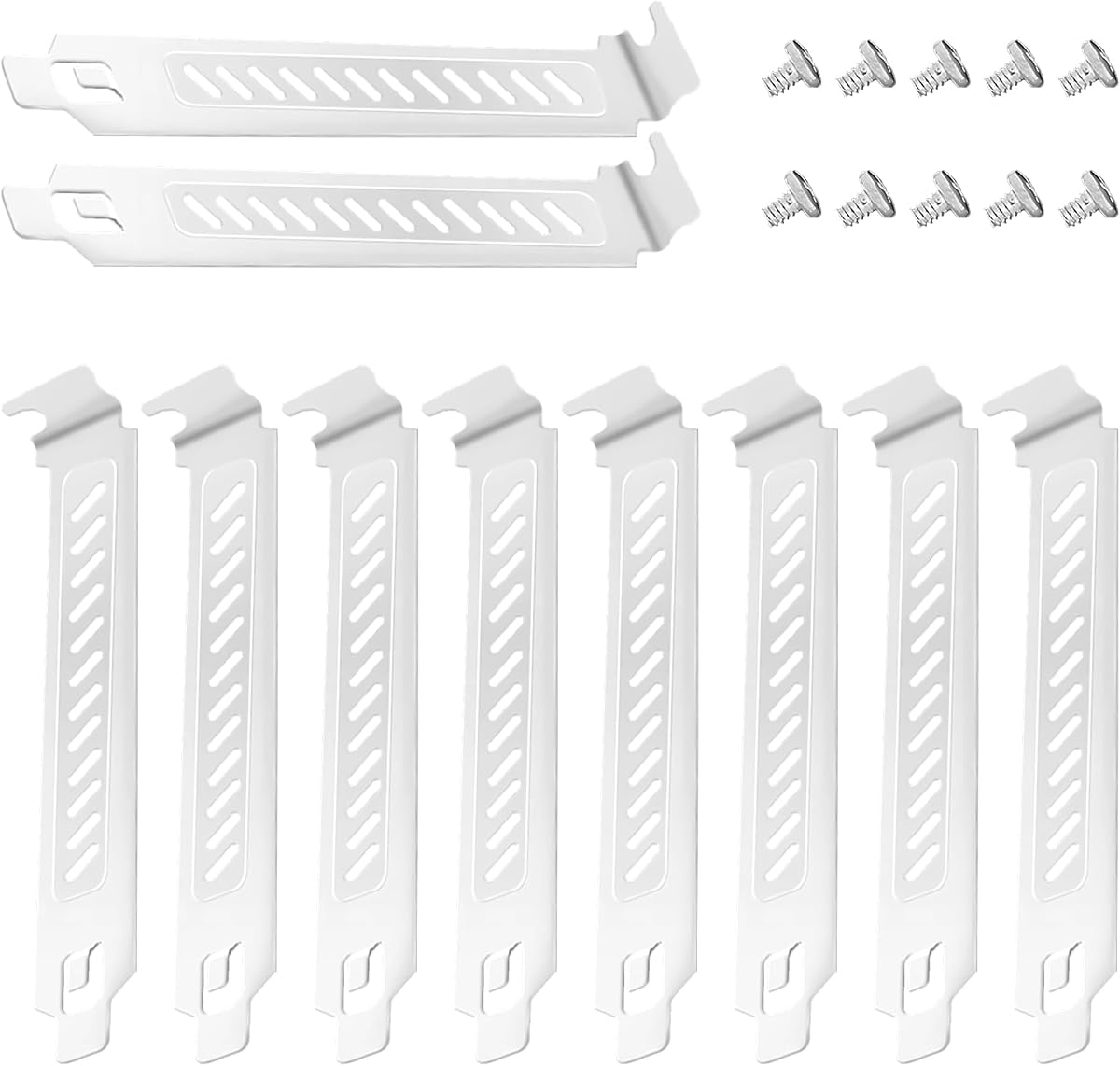
This steel PCI slot cover set combines vented expansion plates with a generous quantity of installation hardware. Its 4.5 rating and ten-cover format make it well suited to builds with multiple unused rear expansion positions, particularly when a white accent is preferred.
We may earn a commission when you buy through this link, at no additional cost to you.
The slanted-hole design is intended to promote airflow and help dissipate heat around the rear of the chassis. Each plate is made from metal described as resistant to deformation and fading. The stated dimensions are 120 by 20 by 12 millimeters, and the set includes ten plates and ten silver screws according to the delivery list.
Some product details are inconsistent. The title refers to five pieces in one portion and a ten-piece pack in another, while the delivery information clearly lists ten covers and ten screws. Buyers should use the delivery list and physical measurements as the reference, especially when the purchase involves a partially upgraded case.
This set is a good option for covering numerous open slots in a white or mixed-color build. The slanted vents preserve some rear airflow while the screws keep the plates secure. Confirm the dimensions and count the empty positions before buying, as the listing's mixed quantity wording could otherwise cause confusion.
Using vented plates rather than solid blanks leaves a path for air to leave the chassis. That is useful because completely sealing multiple rear openings can disrupt the path from front intake to rear exhaust.
The delivery list includes ten silver screws alongside the ten covers. This simplifies installation and provides a spare if a screw is lost during case maintenance.
We may earn a commission when you buy through this link, at no additional cost to you.
The 120mm fan deflector is a directional accessory rather than a dust filter. It is designed to redirect airflow from a compatible fan, helping aim cooling air toward a particular area of the case and potentially improving the effectiveness of a localized thermal zone.
We may earn a commission when you buy through this link, at no additional cost to you.
Its central benefit is control. A standard fan can disperse air broadly, while a duct or baffle can constrain and redirect the output. The black finish is intended to blend into a typical case, and the product's stated purpose focuses on PC thermals rather than particle filtration.
Less information is supplied about the included hardware, materials, and exact mounting method, making compatibility verification important. A deflector may also sit close to cables, drives, radiators, or memory, and forcing the installation could create new airflow obstructions. Its 4.0 rating suggests that setup quality and placement have a meaningful effect on results.
Choose this option when a specific fan needs a more directed stream of air, such as toward a graphics card, motherboard area, or other component cluster. Confirm the fan size, available clearance, and attachment method before installation. It is not a substitute for a mesh dust filter at an exposed intake.
By constraining fan output, the deflector can make a 120mm fan more purposeful. This may be useful in compact cases where air needs to reach a particular component instead of dispersing into unused space.
A duct changes the space immediately behind a fan, so neighboring components should be checked before mounting. Adequate clearance helps preserve the airflow improvement the accessory is intended to provide.
We may earn a commission when you buy through this link, at no additional cost to you.
The right baffle depends on the opening you need to cover, the airflow path in your case, and how frequently you plan to clean it. Measure before buying, identify the material of the mounting surface, and decide whether your priority is dust control, slot coverage, or redirected cooling air.
Start by measuring both the width and height of every opening you intend to cover. Standard fan filters are commonly square, while radiator and case openings may use elongated dimensions. PCI plates require attention to the full profile of the expansion slot, including the spacing between mounting points. A few extra millimeters of margin can make a magnetic filter easier to position, but a cover that is too large may overlap openings or interfere with nearby components.
PC airflow baffles are not interchangeable by function. Magnetic PVC meshes cover open vents and fan positions, PCI covers close unused rear expansion slots, front brackets fill a specific chassis opening, and fan deflectors redirect moving air. Installing a slot cover at a large intake would not serve the same purpose, while placing a deflector over an open vent could restrict airflow rather than guide it. Identify whether the problem is dust entry, an exposed expansion area, or poorly targeted cooling.
Mesh aperture is a practical trade-off between dust interception and airflow. The 0.5mm sheets and covers tend to offer finer filtration, while the 0.8mm filters are designed to preserve more airflow. Neither dimension alone guarantees a perfect result because airflow also depends on the filter area, fan speed, case restrictions, and how cleanly the mesh is maintained. A fine filter that accumulates dust can perform worse than a cleaner, more open filter.
Magnetic filters require a steel or iron surface that can retain the frame. Some cases use aluminum, plastic, coated panels, or mixed materials, and even a steel case may include nonmagnetic sections. Magnetic stickers and strips can improve attachment but do not create a magnetic bond with aluminum or plastic. Before committing to a magnetic design, check the case material and test whether a small magnet holds firmly to the intended location.
Washable PVC mesh is convenient because it can be rinsed, brushed, dried, and reinstalled. Magnetic frames generally make removal faster, while screw-mounted PCI covers are still easy to access from the rear. Foam-based baffles may be less convenient to clean, and large cut sheets require careful handling around their edges. Choose a maintenance method that you will actually use, since neglected filters can become a source of restricted airflow.
Metal slot covers are rigid, resistant to deformation, and easy to screw into a rear panel. PVC mesh is lighter and easier to cut or reposition, but it depends on a secure mounting frame. Finish matters as well: black plates blend with most dark cases, while white covers can create a deliberate contrast. A coherent finish may matter more for a visible rear panel, while material and ventilation should take priority for functional use.
PCI and expansion-slot baffles are sold in different quantities, and package descriptions can be inconsistent. Count the empty rear positions before buying, then compare that number with the delivery list rather than relying on every phrase in a product title. A full-profile plate is the common target, but some compact or specialized cases use different heights or spacing. Ensuring that every unused slot is covered prevents a patchwork appearance and limits obvious dust entry points.
Even a correctly sized filter can interfere with a fan hub, radiator pump, drive cage, cable, or memory module. Expansion covers must line up with the rear mounting holes, and a deflector needs enough room to direct air without touching a nearby heatsink. Look at the complete airflow path rather than only the nominal opening. This is especially important in compact cases where modular components, thick radiators, and tightly routed cables leave little spare space.
Before installation, power down the computer, disconnect the power cable, and allow the system to cool. Identify the intended opening, measure it, clean away existing dust, and confirm that the baffle's material and mounting method suit the case. For a magnetic filter, test the surface with a magnet. For a slot cover, compare the mounting holes and expansion profile with the physical cover.
Install magnetic filters by removing any protective liner and positioning the frame evenly over the opening. If the product uses adhesive magnetic strips, attach them to the filter edge or directly to the case as directed, then press the mesh into place. Screw-mounted PCI covers should be aligned with the rear slot and tightened evenly without forcing the plate. Fan deflectors need additional clearance so the duct does not contact the fan blades, frame, radiator, or neighboring hardware.
Maintenance should occur when visible dust begins to accumulate or according to the conditions in your room. Remove magnetic filters, rinse washable PVC mesh with water, or use a soft brush for light debris, then let the mesh dry fully before reinstalling it. Wipe metal covers with a dry or lightly damp cloth and confirm that vents remain open. Always avoid blocking a powered fan and check that every baffle still sits flat and secure after cleaning.
A dust filter is designed primarily to intercept airborne particles while permitting air to pass. An airflow baffle may redirect air, fill an unused chassis area, or combine structural and filtering functions. The right choice depends on whether the main problem is dust, exposed openings, or a cooling fan whose output needs to be aimed more effectively.
A conventional magnetic frame needs a ferromagnetic surface such as steel or iron, so it will not attach normally to aluminum. Some cases combine metal and plastic sections, and coatings can also reduce magnetic grip. Test the intended area with a strong magnet before purchasing, or choose a screw-mounted or adhesive-based alternative designed for that surface.
PVC mesh filters can often be trimmed, but cutting a framed magnetic filter may damage its edge or weaken the magnetic perimeter. The manufacturer of the 280x140mm and 240x120mm options notes that trimming may be needed around unusual rounded corners. Measure first and trim only the minimum amount required to obtain a clean fit.
Any filter adds some airflow resistance, and a clogged or poorly fitted filter can add more. A clean, correctly sized filter with a suitable mesh aperture usually provides a practical balance between dust protection and cooling. Fan curves, case restrictions, and regular cleaning all influence the final thermal result.
No. Most standard desktop cases use a common full-profile expansion layout, but compact and specialized cases can differ in height, spacing, and mounting design. Measure the existing rear blanking plate, count the available slots, and check the manufacturer's stated dimensions before installation.
Cleaning frequency depends on dust, pet hair, and how much intake air the computer processes. Inspect filters during routine PC maintenance and clean them as soon as visible buildup appears. Washable PVC filters should be fully dried before being returned to the case, and magnetic frames should be reseated evenly.
Not necessarily. A deflector is most useful when a particular fan's air disperses before reaching a component that needs targeted cooling. If the case already delivers air consistently through the critical areas, adding a duct may create obstruction without a meaningful benefit. Check clearance and measure the temperature problem before installing one.
A large DIY mesh sheet can cover several irregular openings, but a purpose-built filter usually gives a better result on a standard fan position. Expansion-slot covers, magnetic intake filters, and directional fan ducts perform different jobs. A complete baffle setup may use several types, each positioned according to the case's intake, exhaust, and unused-slot layout.
The top selections cover three common needs. The 10-piece vented PCI set offers broad rear-slot coverage, the five-piece alloy steel set provides a particularly strong conventional expansion-slot solution, and the 280x140mm magnetic filter serves large intake or radiator areas with washable 0.8mm mesh.
For most builders, the priority should be correct fit, a secure mounting method, and enough ventilation area. Use square or rectangular magnetic filters for standard fan openings, vented metal plates for unused rear slots, and a fan duct only when directional airflow will solve a specific localized heat issue. Clean filters regularly so dust does not turn a dust-control accessory into an airflow restriction.
Finally, verify the current product dimensions, included components, compatibility notes, and customer rating before ordering. Case layouts, mounting surfaces, and available clearance can vary, and product details may be updated over time. The product links in this guide provide a convenient starting point for checking the latest listing information.
October 2026