
Garden Netting Pest Barrier
4.6Editor score
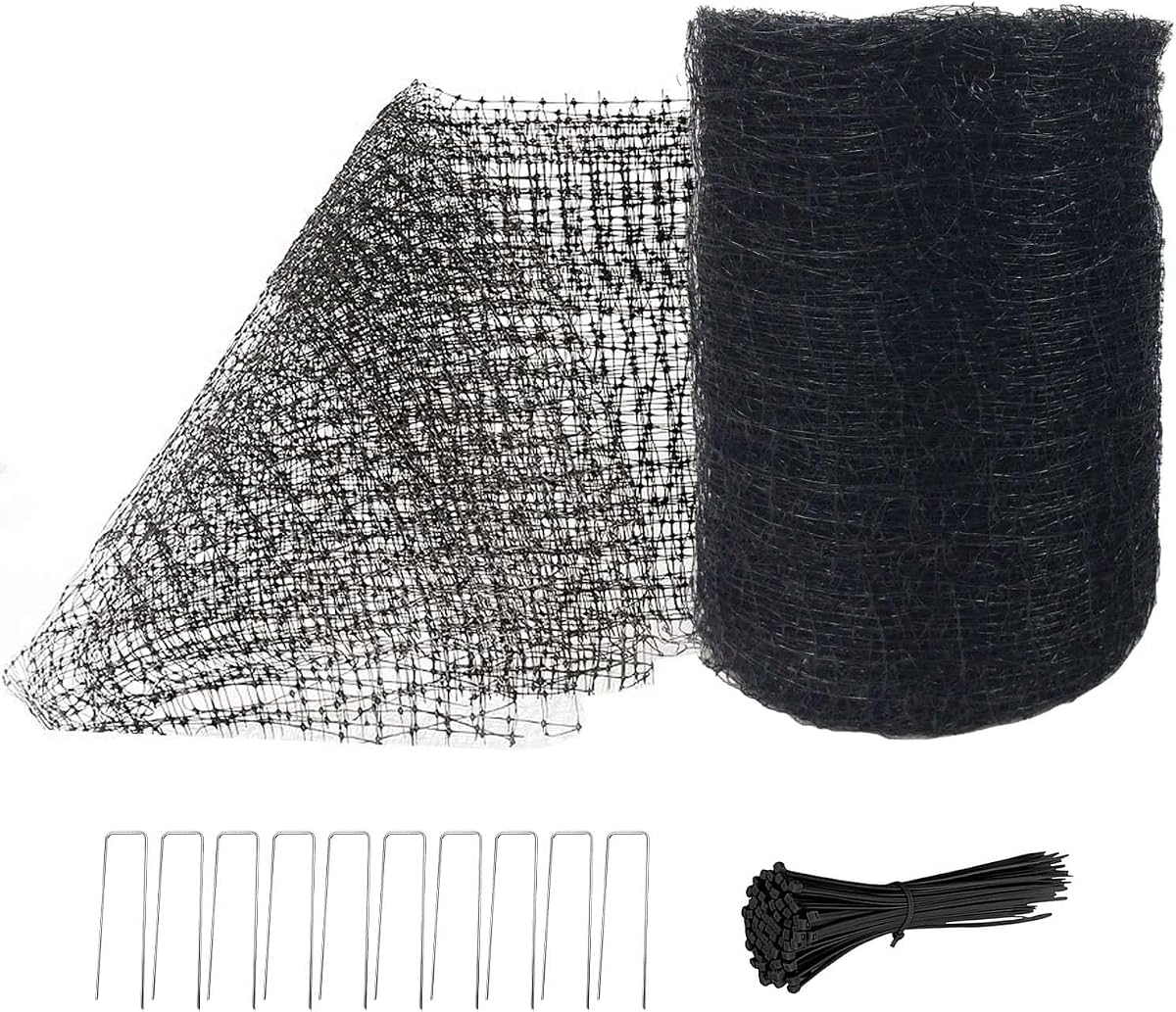
Forty-mesh HDPE construction
Four-by-ten-foot sheet
UV-stabilized and reusable
Compare the best garden netting for raised beds, including mesh size, coverage, durability, installation methods, and protection for plants and pests.
Garden netting for raised beds creates a lightweight physical barrier between vulnerable vegetables, herbs, and flowers and the insects or animals that can damage them. A useful net must balance fine mesh with light, air, and water penetration while remaining easy to cut, secure, and store between growing seasons.
The products in this guide were compared using their stated dimensions, mesh specifications, material, intended uses, installation details, and customer ratings. This list covers ultra-fine insect screens, larger reusable rolls, fitted raised-bed covers, and netting with broader animal-protection capabilities.
Each review explains the circumstances in which a product is most practical, along with its limitations and setup requirements. Ratings reflect the supplied customer feedback, and product availability, configurations, and prices can change, so readers should confirm current details before purchasing.
4.6Editor score

4.5Editor score

4.5Editor score
This side-by-side comparison highlights each net's stated size, mesh approach, construction, and best-fit installation style, helping raised-bed gardeners identify the most practical option for their crops and space.



The Alphatool two-pack is a strong all-around choice for raised-bed gardeners who want fine plant protection without committing to a large roll. It carries a 4.5 customer rating, and its two 10-by-6.5-foot PE mesh panels provide enough material for a compact bed or several smaller covered areas. The ultra-fine construction is intended to discourage insects and birds while allowing water and light to reach the crops.
We may earn a commission when you buy through this link, at no additional cost to you.
Its most useful quality is versatility. The netting can be draped over hoops, shaped around raised beds, or cut into panels for individual plants. Because the material is see-through, gardeners can check growth without removing the cover. That same transparency helps limit the need to disturb plants during routine watering or inspection, and the stated permeability allows sunlight, air, and water to pass through the mesh.
The main limitation is that support poles are not included. A raised bed covered with hoops needs an appropriate frame, and the netting alone will not maintain a tall tunnel shape. The two panels also require more anchoring and joining than a single oversized roll. Buyers should preserve the material away from heat and moisture when it is not in use, as proper storage supports its potential for repeated seasonal use.
This is a strong recommendation for gardeners seeking flexible, fine-mesh protection for vegetables, fruits, and flowers. It works especially well when the bed size is moderate and the gardener is comfortable cutting and securing the panels. For a simple, adaptable setup, it offers a convincing balance of coverage, visibility, and ease of installation.
The cuttable panels can be adapted to flat beds, hoops, or individual plants. This flexibility makes the two-pack useful when a gardener wants separate covers rather than one continuous enclosure.
Its permeable structure allows rain and irrigation to reach the soil while the cover remains in place. The see-through mesh also makes ongoing crop inspection more convenient.
We may earn a commission when you buy through this link, at no additional cost to you.
The KLEWEE 10-by-50-foot roll is the premier choice for extensive raised beds, multiple beds, and gardeners who want one adaptable material for many crops. Its 4.5 rating reflects a well-regarded product offering a large area of ultra-fine 0.8-by-0.8-millimeter mesh. The material is designed to form a physical barrier against birds and common garden animals while preserving ventilation and access to natural light.
We may earn a commission when you buy through this link, at no additional cost to you.
Coverage is the primary advantage. A single roll can accommodate several beds, a broad hoop tunnel, orchard rows, or larger crop groupings. The mesh can also be cut down for later use, making the product flexible even when a gardener's planting plan changes. Its lightweight PE construction is easy to place directly over plants, and stones, soil, stakes, or similar anchors can keep the edges from lifting.
The trade-off is that a large roll requires more attention during installation. Wide sections can collect wind or sag if the edges are not secured, and raised tunnels need a rigid frame. The stated benefits from direct covering depend on leaving enough slack for the plants to grow without pressing against the mesh. Proper folding and storage are also important if the gardener expects to reuse the net through multiple seasons.
Choose this option when coverage area matters more than a fitted shape. It is particularly well suited to tomatoes, brassicas, strawberries, blueberries, beans, and other plants that benefit from fine coverage. For a gardener building a scalable protection system, this roll offers excellent flexibility and strong mesh density.
The generous length can cover several beds or a broad growing area, and unused material can be retained for future crops. This makes the roll economical for gardeners whose layouts change over time.
The stabilized PE construction remains lightweight despite the close mesh. It can be draped across crops without the weight of a rigid blanket, while still limiting pest access.
We may earn a commission when you buy through this link, at no additional cost to you.
RIFNY's two 10-by-33-foot nets combine broad coverage with especially fine mesh, making them a practical option for raised beds that need more substantial protection than a basic row cover. The product has a 4.4 customer rating and uses 0.04-inch oblong openings. That density is intended to restrict insects, dust, and animal access while permitting sunlight, air, and rain to pass through.
We may earn a commission when you buy through this link, at no additional cost to you.
The package contains one product unit holding two 10-by-33-foot nets. These can be spread across two beds, joined for a larger enclosure, or cut into separate covers. Installation is straightforward: place the mesh over the crop, leave room for growth, and secure the perimeter with stones, soil, garden stakes, steel staples, or clips. Its transparency also allows the gardener to monitor plant health at multiple growth stages.
Fine mesh creates a maintenance consideration. The small openings can collect dirt, pollen, or damaged plant material, so periodic inspection and gentle cleaning are sensible. The material should also be folded and kept away from sunlight and humidity during storage. In windy locations, close anchoring is especially important because the broad sheets can act as sails if their edges are left loose.
RIFNY suits gardeners who want a strong fine-mesh barrier and may use netting in multiple locations. Its indoor and outdoor versatility is another attraction for screens, windows, or temporary growing areas. For gardeners who value very small openings more than a fitted shape, this two-net package offers a compelling balance of coverage and transparency.
Each net can cover a separate bed or be combined with the other for a larger enclosure. Cutting the material to fit also makes the package useful for individual plants and unusual bed shapes.
The oblong mesh blocks smaller intruders while still allowing light, air, and moisture through. Crops can be watered directly through the net without removing the barrier.
We may earn a commission when you buy through this link, at no additional cost to you.
The four-by-ten-foot fine bug net is a sensible choice for small raised beds, nursery boxes, and individual plant groups. It has the highest customer rating in this selection at 4.6, and its 40-mesh HDPE construction is designed to form an effective barrier against pest insects and small garden animals. It can be used over hoops, beds, fruit cages, vegetables, and even indoor windows or pond areas.
We may earn a commission when you buy through this link, at no additional cost to you.
The net combines a fine opening structure with a light, plant-safe profile. Air, water, and light pass through readily, so the cover does not need to be removed for routine watering. Its reinforced selvedge is intended to resist unraveling, while the HDPE material is UV resistant and light enough to handle without a rigid frame in many applications.
This is not the right choice for blocking deer, raccoons, or similarly large animals, and its four-by-ten-foot dimensions may be limiting for a long bed. A fine net also benefits from regular inspection because debris can reduce airflow. The stated three-year warranty adds confidence, although actual longevity still depends on exposure, handling, and storage.
For gardeners seeking a compact, straightforward insect screen, this product is difficult to overlook. It has the strongest listed rating, straightforward cut-to-size handling, and enough material for a focused protection project. Choose it when the priority is pest exclusion in a compact area rather than coverage of an entire garden.
The sheet dimensions are practical for one compact bed, a row of containers, or a group of tender seedlings. Its cuttable construction also allows partial sections to be used as needed.
A tight selvedge helps the net resist unraveling when it is cut, draped, and secured. That makes the material more practical for repeated seasonal handling.
We may earn a commission when you buy through this link, at no additional cost to you.
SnugNiture's 10-by-33-foot sheet is a versatile ultra-fine cover for raised beds, greenhouse rows, nurseries, and other growing areas. Its 4.3 rating reflects a useful balance of very small 0.1-by-0.1-millimeter openings, see-through construction, and a stated weight of just 1.23 pounds. That combination makes the net easy to handle and position directly over plants.
We may earn a commission when you buy through this link, at no additional cost to you.
The square mesh allows sunlight, air, and water to pass through, allowing irrigation without removing the cover. It can be cut to fit raised beds, rows, or individual plants, and the edges may be buried or held with stones, soil, or nails. Additional uses include patio screens, door or window covering, and temporary protection around ponds or pools.
The material is described as waterproof and sun-resistant, with a construction intended not to deform or break easily. Even so, no lightweight net should be expected to withstand every large animal without a proper frame and secure anchoring. The broad sheet can catch wind if the perimeter is not fastened on all sides, and the fine mesh will benefit from occasional cleaning.
The product is best for gardeners who want one large, lightweight sheet with many possible applications. It fits well over a moderate raised bed or hoop tunnel and offers enough material to be divided among several crops. Its value comes from flexibility: the same net can serve as a plant cover, row screen, or household barrier.
Beyond raised beds, the netting can serve around windows, doors, ponds, or pools. This makes it useful for gardeners who want one adaptable material around the home.
The lightweight construction can rest over young plants without imposing substantial weight. Leave slack beneath the net, however, so expanding leaves do not push against the mesh.
We may earn a commission when you buy through this link, at no additional cost to you.
This 10-by-33-foot plant-cover net is a practical middle ground between compact insect screens and large agricultural rolls. It carries a 4.3 rating and uses an oblong 0.8-by-1-millimeter mesh. Its stated purpose is to protect vegetables, fruits, flowers, and crops while allowing air and moisture to pass through the enclosure.
We may earn a commission when you buy through this link, at no additional cost to you.
The oblong opening design is intended to provide close protection without blocking normal growing conditions. Sunlight, air, and rain can reach the bed, and liquid feed or irrigation can be applied directly through the material. The transparent construction makes it possible to inspect the crop without lifting the cover, which reduces disturbance and makes early problem spotting easier.
Installation uses the familiar cut-and-anchor method. The netting can be trimmed to the bed dimensions and secured with stones, soil, or stakes. Its broad surface area means that multiple edges must be held down in exposed locations, and the product does not include a support frame. As with other fine nets, it is best stored folded in a dry location when not in use.
This option appeals to gardeners who want the familiarity of a large sheet but do not need the very largest roll available. It can protect raised vegetables, shrubs, and smaller fruit crops while remaining easy to resize. For a straightforward reusable barrier that supports watering and visual inspection, it offers solid utility.
The elongated openings are described as supporting a fine barrier while maintaining airflow and moisture passage. This balance is useful during warm, dry periods when a solid cover would be less practical.
The full sheet can be cut into sections for separate beds or plants. With proper handling and storage, its stabilized PE construction is designed for use beyond a single season.
We may earn a commission when you buy through this link, at no additional cost to you.
AlpineReach offers a straightforward 10-by-34-foot roll designed for raised beds, hoops, frames, and greenhouse-style row covers. It has a 4.2 customer rating and features 0.8-millimeter mesh made from durable, lightweight HDPE. The stated design goal is to protect vegetables, fruits, herbs, and seedlings without restricting the natural conditions plants need.
We may earn a commission when you buy through this link, at no additional cost to you.
Breathability is the product's main strength. Light, air, and water can pass through, so irrigation can occur directly through the installed net. The material can be draped over a bed or shaped over hoops and frames, and it can be cut to fit the gardener's layout. Because the mesh is lightweight, it can be repositioned as beds and crops change.
As with other loose netting, successful use depends on installation. The edges should be anchored, and a hoop tunnel needs a rigid support that holds the net away from the plants. The HDPE construction is described as durable and reusable, but outdoor exposure, wind, snagging, and storage conditions will affect actual service life. This is a general-purpose net rather than one engineered for large-animal containment.
AlpineReach is a good fit for gardeners who value a durable roll, clean dimensions, and easy handling. It is particularly suitable for herbs, seedlings, mixed vegetable beds, and rows that require direct watering. Choose it when a flexible, breathable barrier is more important than a fitted shape or heavy-duty animal fence.
The ten-by-34-foot length can cover a substantial bed area or be cut into separate sections. This makes it adaptable as the gardener rotates crops and changes bed layouts.
Its water-permeable design allows irrigation through the net. Keeping the barrier installed maintains consistent protection while reducing the need to disturb the crop.
We may earn a commission when you buy through this link, at no additional cost to you.
These fitted covers are the most specialized option in the group, designed for rectangular raised beds measuring 8 feet long by 4 feet wide and 1 foot high. The two-pack includes an integrated heavy-duty drawstring, allowing a gardener to slip each cover over a bed and tighten it around the base. That simplicity makes the product attractive for users who do not want to cut mesh or assemble a custom enclosure.
We may earn a commission when you buy through this link, at no additional cost to you.
The high-density material is described as a physical barrier against small intruders and larger garden pests such as birds, squirrels, chipmunks, and rabbits. At the same time, it is designed to permit sunlight, air, and moisture, supporting photosynthesis and normal plant care. The fitted shape can produce a tidier appearance and reduce loose material that might flap in the wind.
The main compromise is fit. These covers are specifically made for 8-by-4-by-1-foot beds, so they may not suit larger, lower, curved, or irregular frames. The product description also presents the weather-resistant, tear-resistant construction as durable, but actual performance will depend on careful handling and storage. A drawstring closure should be checked periodically after strong wind.
Choose these covers when the gardener has matching rectangular beds and values quick installation over maximum flexibility. They are especially helpful for recurring crops that benefit from a repeatable cover. For compatible beds, the two-pack provides a neat, secure, and reusable solution without separate stones, soil, or numerous clips.
The drawstring gathers the cover around the base of the bed. This creates a more uniform enclosure and reduces the need to pin multiple loose edges individually.
The specified dimensions remove much of the guesswork involved with cuttable rolls. Verify the bed's length, width, and height before ordering to ensure a proper fit.
We may earn a commission when you buy through this link, at no additional cost to you.
Feitore's seven-by-100-foot roll takes a different approach from the ultra-fine plant screens. Its three-quarter-inch square polypropylene mesh is intended as a larger animal barrier, and the product is rated 4.3 by customers. The reinforced edge, installation nails, and cable ties help simplify building a protective enclosure around raised beds, shrubs, fruit trees, or garden perimeters.
We may earn a commission when you buy through this link, at no additional cost to you.
The polypropylene construction is described as lightweight and heavy duty. It resists tearing, rust, and rot, does not tangle easily, and can be reused for longer-term protection. Unlike an insect-sized mesh, the openings are large enough to permit airflow without smothering plants, but they will not exclude the smallest insects. The color is black, which blends more discreetly into many garden settings than white fine mesh.
Posts are not included, so a proper fence requires stakes or posts supplied separately. The mesh can be cut with scissors, but the long roll is particularly useful when constructing a continuous boundary. It may also serve as bird, chicken, or rabbit netting and as temporary pond or pool protection. A close perimeter is more important than merely draping the material over crops when the goal is deterring deer.
This is the best choice among the selected products for gardeners who need broader animal deterrence around a raised-bed area. It is less appropriate for delicate insect exclusion, but its reinforced construction and included accessories make it a convenient starting point for perimeter barriers.
The strengthened edge helps the roll stay in a predictable line when attached to posts. This is particularly helpful on larger boundaries where unsupported mesh may sag or pull unevenly.
The same netting can protect vegetables, birds, chickens, rabbits, shrubs, and pond areas. Its larger openings prioritize animal deterrence rather than fine-insect exclusion.
We may earn a commission when you buy through this link, at no additional cost to you.
Jevrench's four-by-25-foot row cover is a manageable option for a single raised bed, a short row, or a set of compact plant groups. It has a 4.4 customer rating and uses ultra-fine 0.8-by-1-millimeter mesh. The transparent PE material is described as twice as thick as ordinary garden netting, with elasticity and toughness intended to withstand outdoor use.
We may earn a commission when you buy through this link, at no additional cost to you.
Sunlight, rain, and air can pass through the mesh, and the cover can remain in place while crops are watered. Its dimensions are easy to handle and the material can be cut into different shapes as the garden changes. The compact size is especially useful for gardeners who want effective coverage but do not need to manage a very large sheet during installation.
The material's stated lifespan of three to five years assumes proper care, and it should be folded and stored appropriately when not needed. A smaller roll also means less total coverage than the ten-by-33-foot, ten-by-34-foot, or ten-by-50-foot products. Because it is not fitted, the gardener must provide adequate anchoring and, where necessary, hoops or a supporting frame.
This cover is a strong choice for a small or medium growing area where durability and ease of handling are priorities. It suits vegetables, flowers, and compact fruit crops that need a fine physical barrier. Buyers should compare its coverage with the dimensions of their bed before deciding whether one sheet is sufficient.
At four by 25 feet, the sheet is simpler to position and store than a large roll. That convenience can make fine-mesh protection more practical for a single bed.
The stated elastic, reinforced PE construction is designed to endure outdoor exposure. Its potential multi-year life makes careful installation and dry storage worthwhile.
We may earn a commission when you buy through this link, at no additional cost to you.
The right garden net depends on bed dimensions, target pests, crop growth, local wind exposure, and how much effort you want to spend securing the material.
Mesh size should reflect the threats you most want to exclude. Ultra-fine screens with openings around 0.8 to 1 millimeter are better suited to insects and small pests, while the Feitore net's three-quarter-inch openings are intended for larger animals such as deer and rabbits. The RIFNY and SnugNiture products use still finer openings for close plant protection, but those dense screens may need more frequent cleaning and careful handling.
Match the openings to the pest, not merely to a general idea of pest protection. A material that blocks birds and rabbits will not automatically block aphids or other tiny insects, and a very fine insect net may not be the most practical option for a large-animal perimeter.
Measure the length, width, and height of each bed before choosing a sheet or roll. A single four-by-ten-foot panel may be ideal for one compact bed but insufficient for a row, while a ten-by-fifty-foot roll can be divided among several beds. The fitted two-pack is specifically designed for 8-by-4-by-1-foot rectangular beds, so checking those dimensions is essential.
Allow extra material for securing edges, draping over hoops, or creating a tunnel. If plants will grow upward beneath the net, provide enough vertical clearance to prevent leaves and flowers from pressing into the mesh.
A useful plant cover should permit sunlight, airflow, and irrigation while remaining in place. All of the ultra-fine options described here are designed to allow these elements through, which can reduce the need to remove covers during watering or routine inspections. Check whether the material feels overly dense before buying, especially for crops that require strong airflow during warm weather.
Permeability also matters for preventing condensation and plant stress. A transparent design is helpful because the gardener can monitor growth without disturbing the barrier or exposing plants to the pests being excluded.
HDPE and PE are the two most common material families represented in this guide. The supplied descriptions emphasize lightweight construction, UV stabilization, toughness, and the potential for repeated use when products are properly maintained and stored. A reusable net is most valuable when it is folded, fully dry, and kept away from excessive sunlight and humidity during off-season storage.
Do not equate lightweight material with disposable use, but do not assume every net will last for the stated period. Wind exposure, snagging, plant contact, and frequent folding all influence actual service life. Handle the edges carefully and repair small tears before they expand.
Most cuttable nets are installed by draping the mesh over crops or hoops and securing the perimeter with stones, soil, stakes, staples, or clips. The fitted raised-bed covers use a drawstring for quicker installation, while the Feitore perimeter net is intended to attach to posts. A flat cover works well for low crops but may need a frame for taller plants.
Choose an installation method that matches the site's wind exposure. A broad sheet acts like a sail if even one edge is loose, so secure the full perimeter and inspect the cover after strong weather. Leave slack beneath the net so expanding plants do not push against the mesh.
Fine mesh is particularly relevant for insects, birds, squirrels, chipmunks, and other small intruders, while a larger-opening perimeter net is more appropriate for deer, rabbits, dogs, and similar animals. Product descriptions often list broad categories, but no lightweight net should be assumed to stop every animal without a secure frame and properly tensioned boundary.
Raised-bed gardeners may also need to consider how the enclosure sits relative to the soil. Buried or heavily weighted edges can discourage animals from pushing underneath, while a hoop frame can keep the mesh off the crops and make inspection easier.
Cuttable rolls offer the most freedom because one piece can be divided among irregular beds, containers, individual plants, and hoop structures. Fitted covers are faster and neater when your beds precisely match the stated dimensions, but they offer less freedom when the layout changes. Fruit trees and shrubs may require a different shape than a low vegetable bed.
Consider whether you expect to relocate the cover during the season. Lightweight PE and HDPE netting can be moved more easily than a rigid enclosure, while a drawstring-fitted cover may be simplest to remove and reinstall around one specific bed.
A net that will be reused should be removed carefully, cleaned of soil and plant debris, dried fully, and folded rather than tightly crumpled. Store the material in a dry location away from direct sunlight and humidity, following the specific care guidance for the selected product. A mesh bag or similar breathable storage enclosure can help prevent loss and tangling.
Inspect the material before reinstalling it. Look for enlarged holes, distorted edges, or areas that have become brittle. Replacing a damaged section may be easier than continuing with a compromised barrier that no longer provides consistent protection.
Begin by measuring the bed and identifying the pests that need to be excluded. Place the netting over the plants or hoop structure, allowing enough slack for growth, and make sure the mesh does not press against leaves or fruiting stems. For a low bed, the material can lie directly over the crop, but a hoop or frame is usually better for upright vegetables and plants that will continue growing.
Secure the entire perimeter with appropriate anchors. Stones, soil, garden stakes, clips, staples, or the drawstring on a fitted cover can hold the edges in place. Anchor points should be spaced closely enough to resist wind, and the net should sit close enough to the bed to discourage animals from pushing underneath. Inspect the installation after wind or heavy rain and repair any lifted sections promptly.
Water and feed crops through the mesh where the product permits it, and check plant conditions without removing the cover whenever possible. During the off-season, remove the netting, clear away debris, wash or gently rinse it as appropriate, let it dry completely, and store it folded in a cool, dry place away from direct sunlight and humidity. Recheck for tears before every new growing cycle.
The best choice depends on the pests and bed size. The Alphatool two-pack is a versatile option for fine-mesh protection, while the KLEWEE roll suits larger areas. The fitted covers are convenient for matching 8-by-4-foot beds, and the Feitore net is intended more for larger-animal perimeter barriers than tiny insects.
Use ultra-fine mesh when small insects are the main concern, and choose a sturdier barrier when birds, squirrels, rabbits, or deer are the threat. A fine net can work for both, but it must be securely anchored and may need a frame to withstand animal contact and wind.
Most cuttable products in this guide are specifically described as cuttable with scissors. Cut away from plant stems, measure carefully, and avoid distorting the mesh. Fitted drawstring covers should not be cut unless the manufacturer provides different guidance.
Support poles are optional for short, low-growing crops but usually helpful for taller plants, hoop tunnels, or covers that must remain off the foliage. The Alphatool package does not include poles. Even without poles, the net needs enough slack and a firmly secured perimeter.
Yes, all of the ultra-fine options listed here are designed to allow water through, and most can remain installed during watering. The size and shape of the openings and the watering method still matter, so check the product instructions and avoid directing a forceful stream that could displace the mesh.
Anchor every edge rather than relying on only a few points. Stones, soil, stakes, staples, clips, or a fitted drawstring can secure the perimeter. Leave slack for plant growth, avoid leaving loose flaps, and check the enclosure after strong winds because broad sheets can act as sails.
Remove the net carefully, clear away soil and plant debris, and let it dry fully before storage. Fold it and keep it away from direct sunlight, humidity, heat, and sharp objects. A breathable bag or loose container can protect it while allowing trapped moisture to escape.
Lightweight breathable netting generally allows ventilation and water movement while protecting plants. Damage is more likely if the mesh is pulled tight or rests against expanding leaves. Leave adequate slack, inspect crops regularly, and avoid placing a cover over a plant that requires substantially more room than the setup provides.
The Alphatool two-pack stands out as the most balanced overall option for raised beds, offering fine PE mesh, two adaptable panels, and easy cutting in a manageable size. The Jevrench cover is another strong compact choice, while the RIFNY package provides two unusually fine large sheets. The KLEWEE roll is the most logical selection for extensive coverage and a scalable garden system.
Prioritize the pest you need to exclude, verify the physical dimensions, and choose a securing method that suits the site. Fine mesh is most appropriate for insects and small garden pests, a fitted drawstring simplifies installation on compatible beds, and larger-opening perimeter netting is better suited to larger animals. Wind management and proper storage matter just as much as the initial setup.
Customer ratings provide useful context, but the feature details and current product listing should guide the final decision. Netting specifications, package contents, and availability can change, so check the current listing before ordering. As with any garden purchase, compare current options carefully and select the cover that best matches the bed, crops, and level of protection required.