
FingerLakes 3.5mm Microphone Assembly
4.3Editor score
3.5mm plug-and-play connection
Nine-foot cable length
Dash mount and visor clip
Discover the best external microphone for car stereo, with compatibility, sound pickup, mounting, cable length, and installation options compared.
An external microphone for car stereo can make hands-free calling feel far more useful, especially when the built-in microphone is tucked away in the dashboard or head unit. The best option combines a compatible connector, clear voice pickup, a useful cable length, and a mount that keeps the microphone steady and close enough to the driver.
This guide compares ten external car microphones according to connector type, supported head units, microphone design, cable length, included mounting hardware, and installation convenience. It covers common 3.5mm and 2.5mm solutions, universal options, Pioneer-specific models, and an alternative 3.5mm recording microphone for shoppers with different needs.
Each review explains who the product suits, what makes it useful, and where compatibility could be limited. The shortlist includes budget, overall, and premium choices, while the comparison table makes the key differences easy to scan. As with all marketplace products, availability and prices can change, so confirm the connector and head-unit specifications before ordering.
4.3Editor score

4.5Editor score

4.4Editor score
The table below compares all ten options by connector, pickup design, cable length, and installation hardware, helping you identify the most suitable external microphone for your particular car stereo.
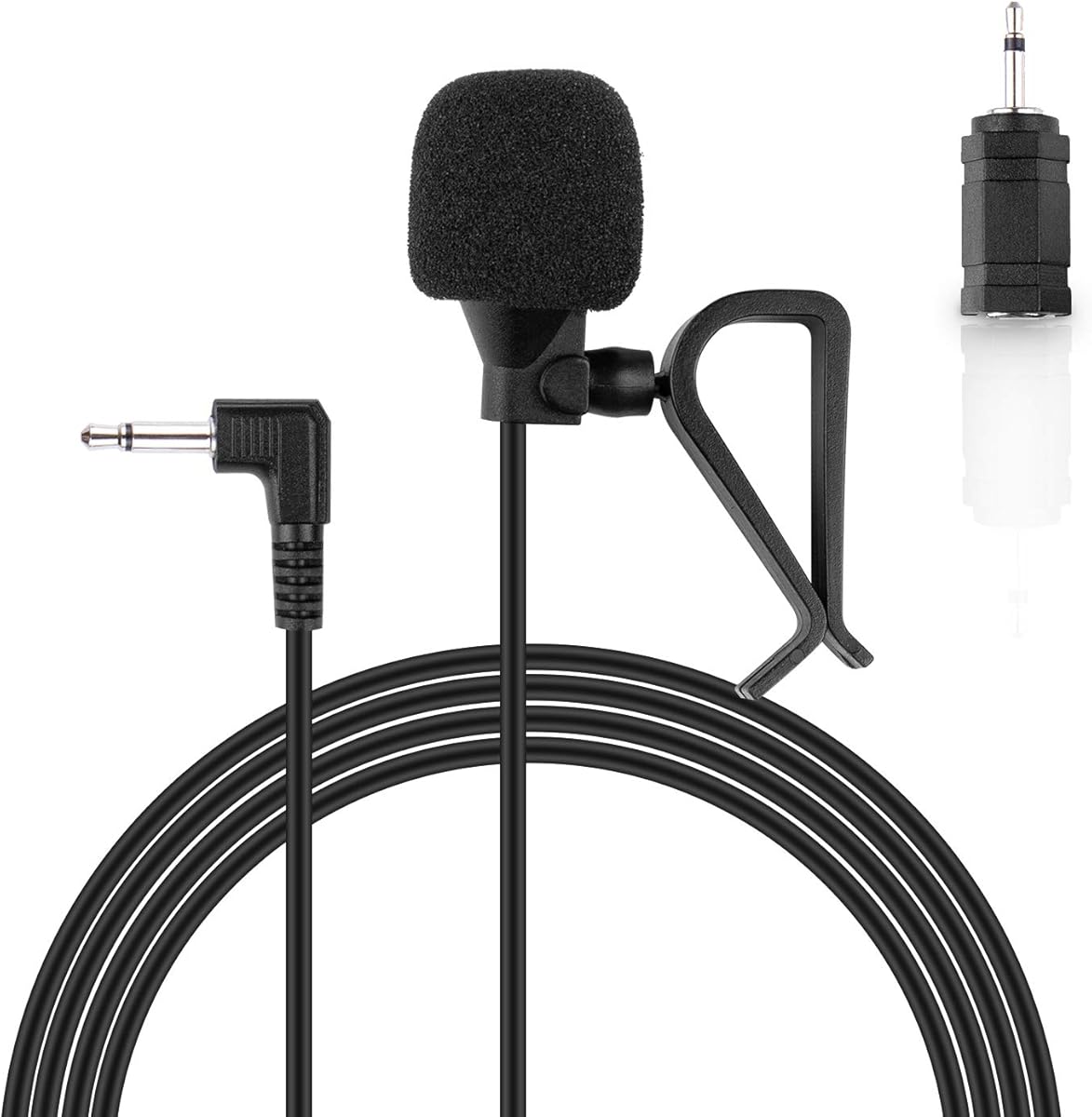


The FingerLakes 3.5mm Microphone Assembly is a straightforward external microphone for drivers whose stereo has a 3.5mm microphone input. It carries a 4.3 rating and stands out for offering a complete installation package without requiring complex wiring. A three-meter cable, dash mount, and visor clip provide enough flexibility for most cars and head units.
We may earn a commission when you buy through this link, at no additional cost to you.
Its electret condenser cartridge is designed for high sensitivity, low impedance, noise resistance, and stable voice transmission. Because the microphone is omnidirectional, it can capture speech from different positions within the cabin. The nine-foot cable makes it practical to route the microphone from a head unit in the center of the dashboard toward the visor, door, or nearby pillar.
The main limitation is connector specificity. The listed 3.5mm plug is designed for head units with a matching microphone socket, and the product description does not mention a 2.5mm adapter. Buyers should therefore inspect their stereo rather than relying only on the brand name. Its pickup specifications are also general, so it is not intended for users seeking advanced directional recording.
This is an appealing choice for a common 3.5mm installation, particularly when the priority is straightforward operation, a useful amount of cable, and two mounting methods. It is our best budget selection because it covers the essentials without overcomplicating the product. Confirm port shape and head-unit compatibility before purchase, then position the microphone close to the driver for the best results.
The high-sensitivity electret condenser cartridge is intended to capture speech clearly during hands-free calls. Mounting the capsule near the driver rather than deep in the dashboard should reduce the distance between the voice source and microphone, which is often the most effective way to improve perceived clarity.
A three-meter cable is long enough for many dashboard, visor, and pillar installations. It can run along trim without obstructing the driver's view, while the included visor clip and dash mount allow the capsule to be adjusted after the vehicle is reassembled.
We may earn a commission when you buy through this link, at no additional cost to you.
The Car Microphone 3.5mm is a versatile aftermarket microphone aimed at owners of popular aftermarket head units. It has a 4.3 rating and includes a 3.5mm-to-2.5mm female-to-male adapter, making it more adaptable than a fixed-size option. The stated compatibility includes Pioneer, Kenwood, Boss, Corehan, Power Acoustik, JVC, Sony, Jensen, and Alpine systems.
We may earn a commission when you buy through this link, at no additional cost to you.
The mono omnidirectional condenser microphone is described as providing high sensitivity, low impedance, and resistance to noise and interference. Its intended use is hands-free communication in vehicles, including head units that support Apple CarPlay and Android Auto. A three-meter cable gives the installer enough reach to place the microphone near a visor, A-pillar, or other unobtrusive surface.
Brand names alone do not guarantee compatibility because head units can use different microphone jack sizes and control standards. The adapter helps with the physical connector, but buyers should also verify that the head unit accepts a standard external microphone and that its audio settings permit hands-free input. The listing does not clearly identify all included mounting pieces.
This microphone is well suited to anyone comparing several popular head-unit brands and needing both 3.5mm and 2.5mm support. It offers a straightforward connection, a generous cable, and a general-purpose electret capsule without the narrow model focus of some alternatives. Check the exact head-unit model, port configuration, and microphone settings before ordering.
The included female-to-male adapter expands the product's usefulness for stereo systems with a 2.5mm microphone input. It is especially valuable for older or smaller aftermarket units, provided the shopper confirms both the jack size and the electrical expectations of the microphone input.
The microphone's fast data transmission and noise-handling design are centered on spoken communication. Placing the capsule near the driver's seat can make calls more intelligible than relying on a microphone buried within the head unit, particularly when road and cabin noise are present.
We may earn a commission when you buy through this link, at no additional cost to you.
The FingerLakes FL11 is a 3.5mm external microphone assembly with a 4.2 rating. Its most distinctive feature is a microphone that can be removed from the clip, allowing the user to experiment with its position for better sound capture. It includes a three-meter cable and is intended for Bluetooth-enabled head units, car stereos, GPS systems, and DVD receivers.
We may earn a commission when you buy through this link, at no additional cost to you.
The electret condenser capsule uses an omnidirectional design with high sensitivity and low impedance. The product data specifically highlights improved communication in a hands-free car kit and stable transmission under different driving conditions. Installation is simple: attach the included sticker to a suitable surface, secure the clip, and connect the 3.5mm plug.
A potential drawback is that the listed adhesive approach may not suit drivers who dislike permanent attachment to trim or glass. Placement also matters because a microphone near a speaker, vent, or exterior window may pick up more unwanted sound. As with other 3.5mm options, buyers must confirm that the head unit has a compatible microphone input.
The FL11 suits shoppers who want to adjust microphone placement without replacing the entire assembly. Its removable capsule, adequate cable, and straightforward installation make it a flexible option for many vehicles. It is particularly appealing when the original built-in microphone is poorly positioned and a better voice angle is desired.
Because the capsule can be picked up from the clip, the installer can rotate or reposition it after installation. This flexibility is useful in cars with unusual dashboard geometry, where a fixed microphone head might point toward the windshield, rear seating area, or a source of cabin noise.
The supplied sticker can attach the microphone to a wall, glass, door, or other suitable interior surface. That makes the assembly useful when no traditional dash bracket is available, although the final location should preserve cable routing and avoid moving parts or direct sources of air.
We may earn a commission when you buy through this link, at no additional cost to you.
This 3.5mm Car Microphone is a general-purpose hands-free microphone for several familiar head-unit brands, including Kenwood, Alpine, JVC, and Sony. It has a 4.1 rating and uses a 3.5mm plug for straightforward connection. The three-meter cable supplies enough routing length for a dashboard, visor, or door installation.
We may earn a commission when you buy through this link, at no additional cost to you.
Its omnidirectional electret condenser design emphasizes speech quality, high sensitivity, low impedance, and resistance to noise and jamming. The product is intended to improve calls played through a hands-free car kit. Installation hardware includes a visor clip and an adhesive option, allowing the user to choose a removable or surface-mounted position.
The broad brand list should still be treated as a starting point rather than absolute confirmation. Head units within the same brand may use different microphone ports, settings, or proprietary connectors, and the listing does not provide a detailed model list. The fixed 3.5mm format may also be unsuitable for stereo systems that require a 2.5mm jack.
This microphone is a reasonable option for a standard 3.5mm head unit where simple installation matters more than model-specific guidance. It provides a good balance of cable length, pickup design, and mounting choice. Verifying the exact head unit and microphone port before buying will prevent most compatibility problems.
The microphone's high-sensitivity, low-impedance electret construction is intended to favor voice transmission. Omnidirectional pickup gives the installer some freedom in placement, although a position close to the driver's mouth still offers the most practical improvement in perceived clarity.
The visor clip provides a convenient location near the driver and can make directional adjustments easier. The adhesive base offers an alternative for a cleaner or more permanent installation. Whichever is used, the cable should be routed away from sharp trim edges and concealed where possible.
We may earn a commission when you buy through this link, at no additional cost to you.
The 3.5mm TRS External Car Microphone is designed for Android head units, Bluetooth stereos, GPS radios, and DVD players that accept a three-pole 3.5mm microphone connection. It has a 4.0 rating and emphasizes improved voice clarity by allowing the microphone capsule to be positioned closer to the driver than a built-in dashboard microphone.
We may earn a commission when you buy through this link, at no additional cost to you.
A high-sensitivity design helps capture speech during calls, navigation prompts, and voice-assistant use. The 9.8-foot cable provides generous routing freedom across dashboards, A-pillars, headliners, or center consoles. Installation requires no cutting or rewiring, and the included visor clip and adhesive base offer two practical mounting methods.
Connector precision is the central concern. The product uses a three-pole 3.5mm TRS connector rather than a generic 3.5mm description, so the head unit must accept that exact arrangement. It does not include a 2.5mm adapter, and a connector that looks similar physically may still have a different pin configuration.
This is an appealing choice for Android-based systems that have a known TRS microphone port and for drivers who want a discreet, closer microphone position. Its long cable and multiple mounting options are particularly useful in modern vehicles with complex dashboard layouts. Confirm the manual or jack marking before installation.
Moving the capsule closer to the driver reduces the distance over which speech must travel, which can make a quiet or distant voice easier to understand. The result is a practical alternative to trying to change the fixed microphone position inside the head unit.
The long cable can travel along the headliner, down an A-pillar, or through the center console. Routing choices allow the microphone to remain out of sight while still being positioned near the person speaking, which helps balance call clarity with a tidy cabin appearance.
We may earn a commission when you buy through this link, at no additional cost to you.
The OM System Olympus ME52W is the most specialized option in this group. It is a unidirectional mono electret condenser microphone with a 3.5mm mini-jack plug, a 100 Hz to 15,000 Hz frequency response, and a plug-in power system. Its 4.2 rating reflects its established position as a compact recording microphone rather than a vehicle-specific hands-free kit.
We may earn a commission when you buy through this link, at no additional cost to you.
Unlike the omnidirectional car microphones, the ME52W is designed to target sound from a particular direction. That can be useful in a vehicle for recording a specific occupant or directing sensitivity toward a particular area. The capsule is only 25 millimeters long, the microphone weighs four grams, and the complete cable and clip weigh 15 grams.
It is not presented as a drop-in car stereo microphone, and its one-meter cord is much shorter than the three- to five-meter cables offered by the vehicle-focused products. The plug-in power requirement also means the connected input must provide suitable power and accept this type of microphone. It is therefore a poor default choice for a standard hands-free head unit.
Buyers should consider the ME52W only when they want a compact, directional recording microphone and can route or extend its one-meter cable safely. It offers a different acoustic approach from the car-specific assemblies, but connector power and input requirements matter more than its attractive specifications. For ordinary hands-free calling, choose one of the purpose-built car options.
A unidirectional microphone concentrates on sound arriving from its intended direction and is less receptive to sources behind it. In a vehicle, that can be useful for a focused recording setup, although real-world speech, reflections, and road noise mean placement remains important.
At 25 millimeters and four grams, the microphone body is easy to conceal or attach to a lightweight support. That low weight is useful for mobile recording, although a permanent dashboard installation would require careful strain relief and protection from heat, moisture, and trim movement.
We may earn a commission when you buy through this link, at no additional cost to you.
The 3.5mm Car Microphone 16ft is the premium pick in this roundup because it combines the longest cable in the group with two connector formats. It has a 4.4 rating and includes an adapter that allows the microphone to operate with either a 3.5mm or 2.5mm car radio microphone input.
We may earn a commission when you buy through this link, at no additional cost to you.
The five-meter cable gives ample freedom to route the capsule from a central dashboard, overhead console, or trunk-area wiring path toward the driver. The product data cites compatibility with a broad range of aftermarket receivers, including Boss, Pioneer, JVC, Sony, Jensen, Alpine, Kenwood, and digital multimedia systems supporting Apple CarPlay and Android Auto.
Its mono omnidirectional electret condenser design is intended for clear, stable hands-free communication with high sensitivity, low impedance, and resistance to noise and interference. The tradeoff is installation complexity. A 16-foot cable can be difficult to hide neatly in a compact dashboard, and excess length should be secured to avoid pulling against the connector.
This microphone is best for vehicles with larger dashboards, overhead routing, or unusually distant head-unit placement. It is also a safer general choice for someone unsure whether their stereo uses 3.5mm or 2.5mm, provided the included adapter is used correctly. The extended reach and broad compatibility justify the premium selection.
The extended cable is the defining feature of this microphone. It can travel through a headliner, pillar, door trim, or under-dashboard channel, allowing the capsule to sit near the driver without stretching a short lead across visible surfaces.
The included 3.5mm-to-2.5mm adapter broadens the potential fit for older and smaller aftermarket stereos. The user should still verify the head unit's microphone specifications, since a physical adapter alone cannot resolve differences in pin arrangement, power, or signal requirements.
We may earn a commission when you buy through this link, at no additional cost to you.
The 3.5mm External Car Microphone with 2.5mm Adapter combines broad compatibility with a three-meter cable and both clamping and adhesive mounting. It has a 4.2 rating and supports major aftermarket brands such as Pioneer, Kenwood, Corehan, Power Acoustik, JVC, Jensen, and Alpine, including many CarPlay and Android Auto systems.
We may earn a commission when you buy through this link, at no additional cost to you.
What sets this model apart is the unusually detailed list of compatible Pioneer and Kenwood examples. The product data names several head units with 2.5mm microphone connections and provides a female-to-male adapter for that purpose. This specificity is useful for owners who know their stereo model and want more confidence than a generic brand claim provides.
The mono omnidirectional electret capsule is described as high-sensitivity and low-impedance, with noise immunity and interference resistance. A new R-shaped fixing visor clip and dash mount provide installation flexibility. However, the long compatibility list should not be interpreted as a guarantee for every stereo, and owners of less common brands should check dimensions and electrical requirements.
This microphone is a strong choice for a vehicle with a widely supported aftermarket head unit, especially when the stereo uses a 2.5mm port. The supplied adapter, useful cable, and mounting hardware cover most needs. It is less compelling for drivers who need confirmed support for a niche model or a proprietary connector, since those specifications are not established here.
Named examples are more useful than broad compatibility claims because they help shoppers match the microphone to a known head unit. The list includes multiple Pioneer and Kenwood families, allowing a buyer to search for the exact factory or aftermarket model before ordering.
The R-shaped visor clip and adhesive dash mount offer both a relatively removable and a more permanent approach. A visor position keeps the microphone close to the driver, while the dash mount can provide a cleaner appearance or accommodate a preferred cable route.
We may earn a commission when you buy through this link, at no additional cost to you.
The SCREENTRONICS 2.5mm Plug Microphone is the editor's choice and the highest-rated product in the list, with a 4.5 rating. It is built for Pioneer head units that use a 2.5mm microphone connection and includes an extensive list of compatible AVH, AVIC, DEH, DMH, FH, MVH, SPH, and MXTX models.
We may earn a commission when you buy through this link, at no additional cost to you.
Its high-sensitivity microphone is designed to capture voice accurately while reducing cabin noise. The nine-foot cable gives the installer enough reach to route the capsule across the dashboard, up an A-pillar, or toward the visor. Placement options include the dash, visor, or pillar, allowing the microphone to be positioned near the driver rather than left at the far end of the console.
The fixed 2.5mm plug is the decisive limitation. It is a strong match for the many named Pioneer systems, but it will not fit a stereo designed around a 3.5mm microphone socket. The product data does not mention a universal 3.5mm adapter, so checking the head unit's socket and model is essential.
For a driver with one of the listed Pioneer units, this is the most confidence-inspiring option in the guide because the compatibility information is unusually thorough. It also combines a high rating with a practical cable and flexible placement. It earns the editor's choice for owners who know their exact head-unit model.
The product page names a large collection of compatible models across several Pioneer series. That level of detail helps distinguish it from generic universal microphones and gives owners a practical way to confirm that the connector and function match their receiver.
A nine-foot cable makes it possible to place the capsule near the driver's mouth while keeping the head unit in its usual dashboard position. The improved proximity can make a noticeable difference in hands-free conversations, especially when the original microphone is recessed or poorly oriented.
We may earn a commission when you buy through this link, at no additional cost to you.
The 3.5mm Car Microphone 3M is a well-equipped general option for several major head-unit brands. It has a 4.1 rating, a 3.5mm microphone connector, and a female-to-male adapter for 2.5mm inputs. Its three-meter cable is supplemented by a built-in clip, a dash mount, and a foam filter.
We may earn a commission when you buy through this link, at no additional cost to you.
The electret condenser cartridge is described as high-sensitivity, low-impedance, and resistant to noise and interference. The built-in clip is intended to improve the direction from which the microphone captures speech, while the dash mount allows a more permanent installation. The foam filter may help reduce some sharp or disruptive sound around the capsule.
The compatibility claims cover Pioneer, Sony, Kenwood, Alpine, Boss, JVC, Jensen, and other aftermarket head units, with numerous individual examples included. Nevertheless, buyers should check the precise model and microphone port because the brand list does not prove that every receiver uses the same connector or activation method.
This microphone is a versatile choice for a mainstream aftermarket stereo, particularly when the user values a complete set of installation pieces rather than just a cable and capsule. The combination of adapter, foam filter, dash mount, and clip provides good flexibility. Correct placement and connector verification remain the most important installation steps.
The included foam filter fits around the microphone and can reduce sharp, plosive, or disruptive sound near the capsule. It does not eliminate road noise, but it adds a practical layer of control when the microphone is placed close to the driver's mouth.
A built-in clip, visor-style mounting, and adhesive dash base provide several installation choices. The included three-meter cord can be concealed along trim, allowing the microphone to remain close to the driver while keeping the visible dashboard uncluttered.
We may earn a commission when you buy through this link, at no additional cost to you.
The most important choice is physical and electrical compatibility, followed by pickup quality, cable routing, and mounting. Reviewing these factors before ordering is more reliable than focusing on broad compatibility claims.
External car microphones commonly terminate in 3.5mm or 2.5mm plugs, but the diameter alone does not prove compatibility. Head units may also differ in whether they use a standard microphone input, a proprietary accessory connection, or a specific number of contacts. Check the stereo manual, inspect the existing microphone, and look for a labeled external mic jack rather than assuming that a matching-looking hole will work.
Brand names are useful but not conclusive. Models from the same manufacturer can use different microphone sockets, cable resistances, and menu settings. A product that provides a detailed model list is generally more helpful than one that simply says it works with many stereos. Locate the model number on the faceplate or chassis and compare it with the seller's compatibility information, including any adapter needed.
Most purpose-built car microphones use an omnidirectional electret condenser design, allowing them to capture speech from a broad area. A unidirectional microphone concentrates on sound from one direction and can be useful for focused recording. For calls, the more important factor is usually placement: positioning the capsule near the driver can improve clarity more than a small difference in nominal pickup pattern.
A three-meter cable is sufficient for many dashboards, visors, and A-pillars, while a five-meter lead provides greater freedom in larger or more complex installations. Measure from the head-unit socket to the intended microphone location, allowing extra length for bends and trim routing. Excess cable should be coiled and secured so it does not pull on the plug or create a loose loop near controls.
A visor clip is easy to adjust and keeps the microphone close to the driver. Adhesive mounts can create a cleaner, more permanent installation but require careful surface preparation. Dash brackets may suit vehicles with particular trim shapes. Check whether the cable is fixed to the capsule or detachable, because a removable head can be repositioned after the dashboard is assembled.
Some microphones, particularly compact recording models, use plug-in power and expect the connected device to supply it. Many aftermarket hands-free microphones are designed to work with the appropriate vehicle head unit, but that does not make them suitable for every recorder or stereo. Review the product's operating requirements and the head unit's accessory specifications before using an adapter or alternate input.
A microphone placed near the driver will generally capture a stronger voice signal than one mounted deep in the dashboard. Avoid positioning the capsule directly beside an air vent, speaker, windshield, or exterior panel where airflow and road noise are strongest. The included foam filter may soften sharp sound, but it cannot replace thoughtful placement or proper gain and noise-reduction settings in the stereo.
A functional microphone can still look untidy if its cable crosses the dashboard. Plan a path behind the headliner, down an A-pillar, under a trim edge, or through an existing accessory channel. Leave enough slack at the head unit to avoid stress on the connector, and keep the wire away from sharp metal edges, heat sources, and moving steering-column components.
Begin by identifying the correct external microphone port on the head unit and disconnecting power or turning off the stereo during installation. Connect the microphone with the vehicle off, route the cable behind the trim, and avoid forcing a plug that does not seat naturally. If an adapter is required, make sure the connector fully seats and that the stereo identifies an external microphone.
Position the microphone capsule close to the driver's normal speaking position, usually near the visor, A-pillar, or upper dashboard. Secure the clip or adhesive mount without covering the pickup opening. After reconnecting the stereo, make or receive a test call, adjust the microphone gain, and change the head unit's noise reduction or echo cancellation settings gradually to avoid an unnatural or overly processed result.
Inspect the mount and cable occasionally, especially after temperature changes or heavy travel. Clean the capsule gently with a dry, soft cloth and keep moisture, dashboard wax, and cleaning sprays away from the opening. Do not pull the cable by the microphone head, and replace the microphone if the connector feels loose, the sound becomes intermittent, or the mount begins to slip.
They are not automatically interchangeable because the connectors have different diameters and may use different contact arrangements. Some products include a female-to-male adapter that allows a 3.5mm microphone to connect to a 2.5mm input. You should still confirm that the head unit supports a standard external microphone and that the adapter is physically and electrically appropriate.
The best location is usually near the driver, such as the visor, A-pillar, or upper dashboard, where the capsule is closer to speech. Keep it away from speakers, vents, open windows, and exterior wind. Route the cable behind trim and test the sound in a real call before making the installation permanent.
Yes, it can provide a clearer result when the original microphone is recessed, poorly positioned, or affected by cabin noise. The largest improvement usually comes from moving the capsule closer to the driver rather than from the microphone model alone. Stereo gain, noise reduction, and echo cancellation settings can also affect the final sound.
That depends entirely on the microphone socket. A 3.5mm plug needs a matching 3.5mm input, while a 2.5mm plug needs a matching 2.5mm input. Some listed products include an adapter for the alternate size. Confirm the exact socket, the stereo model, and whether an external microphone accessory is supported before buying.
A longer cable is useful when the head unit is far from the best microphone position, but it is not automatically clearer. Extra length must be routed and secured without pulling on the connector. For many compact dashboards, a three-meter cable is adequate, while longer vehicles or concealed A-pillar routing may benefit from five meters.
Check the head unit's microphone gain, input selection, and noise-reduction settings, and confirm that the correct external microphone input is active. A loose connector, poor ground, or a cable routed near an electrical interference source can also reduce the level. Test the microphone close to your mouth to determine whether the issue is placement or the head unit configuration.
It can work when the head unit routes its external microphone input to calling, voice-assistant, or navigation-audio functions. Not every stereo permits the external microphone to serve all of those purposes, so check the manual and test each feature after installation. The microphone's position may also need adjustment for both voice pickup and system alerts.
An omnidirectional microphone captures sound more evenly from around its capsule, which is convenient for general car calls. A unidirectional microphone is more selective and emphasizes sound arriving from its front. Most vehicle hands-free assemblies favor omnidirectional pickup, while the OM System ME52W in this guide offers targeted capture for more specialized recording needs.
The FingerLakes 3.5mm Microphone Assembly is the best value for a straightforward 3.5mm installation because it combines a three-meter cable with visor and dash mounting. The SCREENTRONICS 2.5mm Plug Microphone is the editor's choice for owners of listed Pioneer head units, while the 3.5mm Car Microphone 16ft is the premium option for extensive routing and two connector sizes.
Your priorities should begin with exact head-unit compatibility, followed by the physical microphone port and the location where the capsule will sit. Cable length matters only after those basics are settled. A properly placed microphone with a standard connection will usually deliver a more useful result than a nominally more advanced model installed in a poor position.
Before making a final purchase, compare the exact head-unit model against the published compatibility list and inspect the existing microphone connector. Marketplace listings, included accessories, availability, and prices can change, so checking the current product page and seller information helps ensure that the selected external microphone is ready for a clean installation.