
Forensics Hydrogen Sulfide Analyzer
5.0Editor score
Built-in sampling pump
0.1 ppm resolution
Color display and logging
Our Hydrogen Sulfide Monitor guide compares ten single-gas and multi-gas detectors, helping you evaluate alarms, sensors, portability, logging, and battery
A hydrogen sulfide monitor provides an important layer of protection in workplaces where H2S may accumulate, including sewers, confined spaces, farms, industrial facilities, and areas near decaying organic material. A dependable unit should detect gas quickly, trigger unmistakable alerts, withstand demanding conditions, and remain easy to carry and operate.
We compared these ten monitors by examining their supported gases, measurement and detection capabilities, alarm styles, power options, data handling, environmental resistance, and intended working environments. The list includes dedicated H2S detectors, compact clip-on models, and four-gas monitors that measure H2S alongside CO, oxygen, and combustible gases.
Each review explains the strongest features and practical compromises of its product, helping you narrow the field according to workplace requirements. Ratings, specifications, features, and availability can change over time, as can pricing and promotions, so confirm the current product details and manufacturer guidance before purchasing.
5.0Editor score

4.6Editor score

3.9Editor score
The table below compares the ten monitors by gas coverage, alerting capabilities, data functions, and practical design, making it easier to identify the right option for routine industrial work, confined-space preparation, or dedicated H2S monitoring.

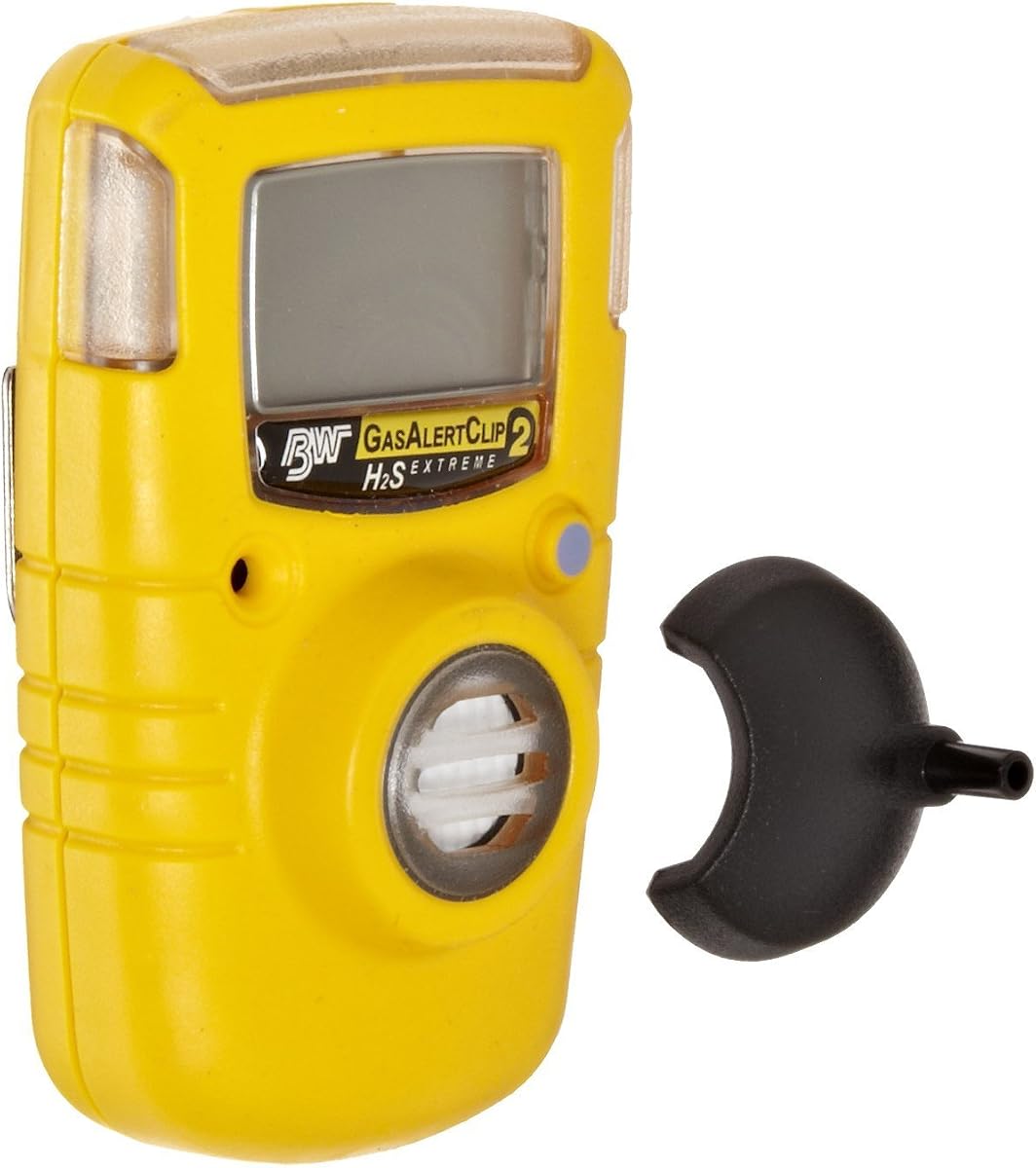


The Honeywell BWC2-H is a compact, dedicated H2S detector designed for personnel who need a straightforward way to carry a personal gas monitor. It carries a 4.6 rating and stands out for its simple one-button operation, event logging, configurable alarm set points, and compatibility with established BW docking and management systems. That combination makes it especially appealing to organizations that already use BW Technologies equipment.
We may earn a commission when you buy through this link, at no additional cost to you.
Its strengths center on a balance of portability, useful automation, and manageable operation. The detector can automatically record the 35 most recent gas events and bump-test results, giving supervisors a recent history without requiring users to manually document every alarm. High and low alarm set points can be configured before activation, while hibernation mode supports responsible storage when the device is not in active service. Compatibility with IntelliDoX, microdock II, and Fleet Manager II software extends its usefulness for organized test and administration programs.
The principal compromise is that this is a single-gas model: it monitors H2S rather than simultaneously measuring oxygen, carbon monoxide, and combustible gases. Workers entering confined spaces may need additional instruments or a multi-gas detector. Accessories and compatible docking equipment may also need to be considered separately. Nevertheless, the BWC2-H remains focused, portable, and operationally mature for H2S exposure monitoring.
Choose the BWC2-H when a dedicated personal H2S monitor, automatic records, and integration with BW management tools matter more than broad gas coverage. It is a strong general recommendation for industrial teams, contractors, and facility managers seeking a conventional clip-on detector with dependable documentation features.
One-button operation reduces the amount of training needed for routine wearers. The compact, lightweight housing is suited to shifts where the monitor must remain on a belt or clip while the user performs normal duties.
Automatic storage of recent gas events and bump-test results gives managers a useful record without requiring users to transcribe readings. Dock and fleet software compatibility further supports centralized administration.
We may earn a commission when you buy through this link, at no additional cost to you.
The Forensics Hydrogen Sulfide Analyzer is the most instrument-oriented option in this guide, pairing a 0–100 ppm measurement range with 0.1 ppm resolution and a built-in sampling pump. It holds a 5.0 rating and includes a four-foot probe, a color display, graph functions, USB computer data logging, and USA NIST-traceable calibration. It is a strong choice when detailed readings and remote sampling are more important than minimal size.
We may earn a commission when you buy through this link, at no additional cost to you.
The built-in pump distinguishes this model from a basic personal clip-on detector. Instead of relying only on diffusion at the wearer’s location, the unit can draw a sample through the extended probe, which may be useful for checking a remote area, examining equipment, or performing more controlled monitoring tasks. The color screen and graph functions make changing readings easier to interpret, while timestamped alarm events and USB logging create a more detailed record for later review.
Durability is another strength. The analyzer uses high-strength ABS, an anti-slip rubber grip, and a water-resistant, dust-resistant, explosion-proof design. It arrives with calibration and quality assurance certificates and is backed by a one-year limited warranty. The trade-offs are portability and workflow: the pump, probe, and screen create a larger instrument than a wearable alarm, and the sampling system requires appropriate handling. The unit also focuses exclusively on H2S rather than combining it with oxygen and combustible readings.
This analyzer is best for trained operators, industrial response teams, and users who need sampled measurements, fine resolution, graphs, and computer records. If your task is routine personal exposure monitoring, a smaller dedicated detector may be easier to wear. If detailed readings and logged evidence are central, the Forensics model offers the most sophisticated feature set here.
The integrated pump and four-foot probe allow the analyzer to sample beyond the immediate vicinity of the instrument. This is useful when a fixed reading location, inaccessible area, or equipment check requires a more directed measurement.
A 0.1 ppm resolution figure, color visualization, and graph functions support closer interpretation of readings. Timestamped alarm events and USB logging add a layer of documentation that is particularly useful for formal monitoring work.
We may earn a commission when you buy through this link, at no additional cost to you.
The MSA Altair H2S is a purpose-built personal detector for hydrogen sulfide, with an advertised sensor lifespan of more than two years and a simple one-button interface. Its standout specifications include LED, audible, and vibrating alarms, along with superior dust and water protection and high resistance to radio-frequency interference. No current customer rating is shown in the supplied product data, so its reputation should be evaluated primarily from those documented features.
We may earn a commission when you buy through this link, at no additional cost to you.
The sensor-longevity claim is particularly valuable for teams operating instruments continuously. A longer advertised operating life can reduce the frequency of sensor-related replacement, although actual service intervals should always follow the manufacturer’s instructions and the sensor’s condition. The combination of visual, sound, and vibration alerts also supports different working conditions: a worker may hear an alarm, feel it through clothing, or notice its visual indicator.
As with other dedicated H2S detectors, the trade-off is coverage. The Altair does not measure oxygen, carbon monoxide, or combustible gases in the same instrument, so it cannot replace a complete four-gas analyzer for atmospheric assessment. Users must also stay attentive to prescribed bump tests, calibration procedures, alarm set points, and replacement schedules. Its one-button design simplifies training but does not remove the responsibility for routine checks.
The Altair is best suited to individual workers who need reliable H2S-specific wearable protection and value durable construction, multiple alert styles, and a long advertised sensor life. Choose it when a dedicated personal monitor fits the job better than a multi-gas instrument or probe-equipped analyzer.
LED, audible, and vibrating alarms provide several ways to recognize a hazard. This is useful in noisy, poorly lit, or confined environments where a single alert method may be easy to miss.
Superior dust and water protection and high RFI resistance support use in demanding environments. The housing and controls are designed to prioritize straightforward daily operation in industrial settings.
We may earn a commission when you buy through this link, at no additional cost to you.
The GasAlertClip Extreme is built around a simple premise: continuous H2S protection with minimal upkeep. This two-year version carries a 4.3 rating and requires no calibration, sensor replacement, battery replacement, or battery charging. It also offers automatic event logging, a full-function self-test, bright wide-angle visual alarm bars, a built-in protective boot, and water resistance.
We may earn a commission when you buy through this link, at no additional cost to you.
The maintenance profile makes it appealing for contractors and organizations that issue gas monitors to many workers. Removing routine charging and calibration tasks reduces administrative work, while MicroDock II compatibility supports automated testing workflows. The full self-test covers the sensor, battery status, circuit integrity, and audible and visual alarms, helping users confirm basic functionality before relying on the device.
The trade-off is that this remains a single-gas H2S monitor. It is not a substitute for an oxygen, carbon monoxide, or combustible-gas instrument. Because the unit is designed for a fixed service life, replacing it at the appropriate interval is part of the ownership model. Users should also verify that their facility’s test procedures and required alarm set points align with the product configuration.
The GasAlertClip Extreme is an excellent fit for teams seeking dependable clip-on monitoring without recurring battery service or calibration maintenance. It is especially relevant for high-turnover workforces, short-term contractors, and sites that already operate BW MicroDock equipment.
The absence of routine calibration, battery replacement, and charging makes this model operationally efficient. Users can focus on prescribed inspections and the built-in self-test rather than a recurring maintenance cycle.
Automatic event logging supports record keeping without manual documentation of every incident. Wide-angle visual alarm bars provide a prominent warning, while the built-in boot adds protection against knocks and rough handling.
We may earn a commission when you buy through this link, at no additional cost to you.
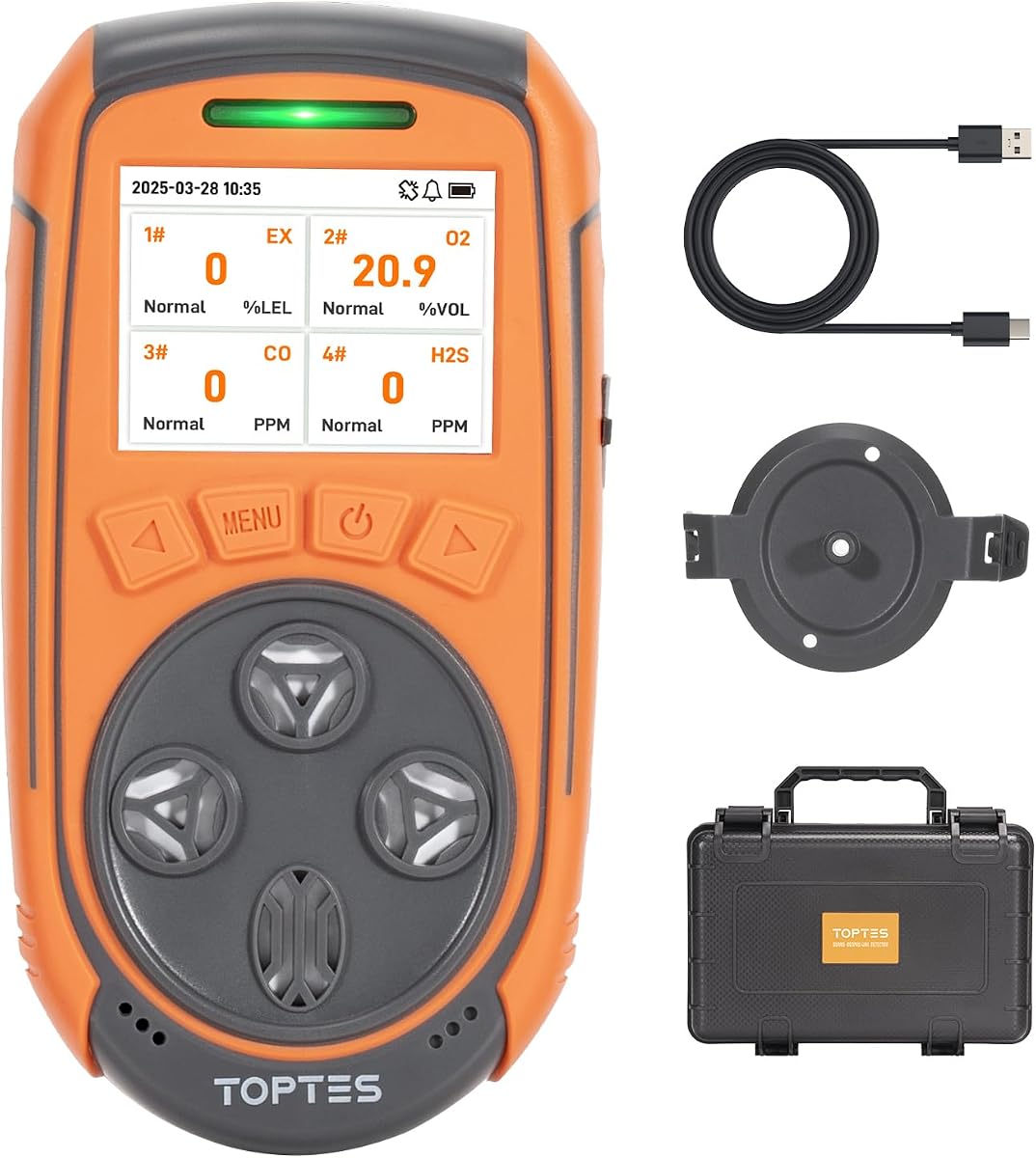
The TopTes Guard-863Pro combines H2S, CO, lower explosive limit, and oxygen monitoring in one unit, making it a versatile choice for industrial work and other environments where several atmospheric hazards may coexist. It carries a 4.7 rating and stands out with a 0.5-second response time, TFT color display, USB data export, an oxygen sensor advertised for up to five years of service, and more than 18 hours of continuous operation.
We may earn a commission when you buy through this link, at no additional cost to you.
The color screen presents live gas concentration matrices and trend curves, which can make a four-gas instrument easier to interpret than a simple numeric display. USB export covers alarm records, fault logs, calibration records, and operation history, providing useful documentation for review. The sound, light, and vibration alarm system continues until readings return to safe levels, and fast charging helps minimize downtime between shifts.
The central compromise is size and scope. A four-gas monitor offers broader information than a dedicated H2S detector but may be less convenient for users who only need one gas and prefer a smaller wearable. Although the product description includes home use among its applications, a professional gas monitor should not be treated as a substitute for fixed residential alarms or professional building inspection. Employers should match the device to recognized workplace requirements.
The Guard-863Pro is a strong all-around choice for contractors, industrial teams, emergency responders, and others who want one instrument to monitor four common workplace hazards. Its fast response, rich display, logging, and battery life make it particularly useful where quick interpretation and record keeping matter.
Simultaneous H2S, CO, LEL, and O2 monitoring reduces the need to carry several dedicated instruments. This makes the Guard-863Pro useful for confined-space assessment and other tasks where changing atmospheric conditions must be evaluated together.
USB export brings alarm records, fault logs, calibration records, and operating history into a format that is easier to review. The TFT display’s trend curves add visual context beyond a single instantaneous number.
We may earn a commission when you buy through this link, at no additional cost to you.
The TopTes Guard-101 provides a practical four-gas package for H2S, carbon monoxide, lower explosive limit, and oxygen. Its 4.1 rating reflects a solid set of features for users who need broad monitoring without the larger feature set of the Guard-863Pro. It offers a stated 0.5-second response, battery life of up to 14 hours, and simultaneous LED, vibration, and sound alarms.
We may earn a commission when you buy through this link, at no additional cost to you.
Its high-strength ABS enclosure is described as waterproof, dustproof, and explosion-proof, while a back clip makes the detector easier to wear. Alarm records can be reviewed when needed, and password protection reduces the chance of accidental operation. The supplied package includes the detector, packaging box, user manual, charging cable, and standard gas hood, giving users the basic accessories needed to begin routine use.
The main limitations are the shorter stated battery duration and less sophisticated record handling than the Guard-863Pro. As a four-gas device, it also requires more attention to sensor care, test gas, calibration, and manufacturer procedures than a simple H2S-only alarm. The inclusion of home use in the product description should not be interpreted as making it a substitute for approved residential detectors, which are designed for different applications.
The Guard-101 is best for workers who want H2S plus three other common atmospheric readings, rapid alarms, and straightforward clip-on portability. It is a sensible choice when a compact four-gas instrument is needed but extensive trend analysis and USB export are not priorities.
Light, sound, and vibration work together to make warnings noticeable in different jobsite conditions. Alarms continue while readings remain abnormal and return to normal, supporting persistent hazard awareness.
The back clip keeps the device accessible without requiring a handheld position during routine work. A protective ABS body and the included standard gas hood support use in environments where equipment needs practical physical protection.
We may earn a commission when you buy through this link, at no additional cost to you.
The TopTes Guard-633 is a dedicated, clip-on H2S monitor that emphasizes long operating time, user-adjustable alerts, and a low-cost entry into personal gas monitoring. It carries a 3.9 rating and advertises a 0.5-second response, up to seven days of continuous operation after a five-hour charge, a low-battery alert, and LED, vibration, and audible alarm modes.
We may earn a commission when you buy through this link, at no additional cost to you.
Adjustable alarm thresholds let users set warning levels according to their own requirements, while data logging can help track historical alerts and monitoring records. The real-time battery display and low-battery warning help users avoid being surprised by a loss of protection during a long task. A clip-on format, calibration certificates, certification documents, and an included standard gas hood complete the basic package.
The trade-offs are the dedicated H2S-only measurement and the lower customer rating compared with many products in this list. Seven days of operation is an advertised maximum under stated conditions, so actual duration can vary with use and settings. A long battery does not replace required bump tests, calibration, or sensor maintenance, and organizations with strict international certification or procurement requirements should verify the documentation and approvals relevant to their site.
The Guard-633 is best for budget-conscious users needing a dedicated, rechargeable H2S alarm with flexible thresholds and long claimed battery life. It offers more control than a basic fixed-threshold detector, making it useful for contractors, maintenance teams, and site visitors who need focused personal monitoring.
A claimed seven-day operating duration can be useful during extended work periods and remote assignments. Battery-level display and low-battery alerts help users manage power before coverage is interrupted.
Customizable thresholds allow users to align warnings with their own operating plan. Three alert methods provide redundancy, while data logging creates a record of alerts for later review.
We may earn a commission when you buy through this link, at no additional cost to you.
The Portable H2S Gas Detector is a straightforward single-gas alarm with a 0–100 ppm measurement range, stated accuracy of plus or minus 5%, a backlit LCD, and an IP65 protection rating. Its 3.8 rating makes it one of the less highly rated products in the comparison, but the core design is easy to understand: clip it on, watch the reading, and respond to the buzzer and red indicator alarm.
We may earn a commission when you buy through this link, at no additional cost to you.
Its backlit screen improves readability in low-light work areas, and the lightweight handheld-and-clip design supports portable use. A high-sensitivity sensor is specified to provide quick response and stable readings. Password protection, with an initial factory password of 1111, helps prevent accidental operation, while the ability to change the password can support more controlled handling.
The compromises are meaningful for professional programs. There is no stated data logging, and the feature set is less extensive than that of the TopTes, Forensics, and BW products. A stated accuracy figure and IP65 rating should be evaluated against your certification, maintenance, and documentation requirements. As with every electrochemical H2S sensor, proper storage, activation, bump testing, and calibration practices remain important even though those functions are not emphasized in the product description.
This detector is best for simple personal H2S awareness, site visitors, and users who prioritize a compact display and audible visual warning over extensive logging or fleet integration. It can be a practical entry option, but professional purchasers should verify local acceptance and maintenance requirements before relying on it for a regulated program.
The backlit LCD presents ppm readings in a format that can be checked quickly. A buzzer and red indicator provide two distinct warning methods without requiring a menu-heavy interface.
The IP65 rating supports resistance to dust and water during mobile use. Its lightweight clip-on format makes it convenient to keep on a person when the wearer needs both hands for tasks.
We may earn a commission when you buy through this link, at no additional cost to you.
The Forensics Four-Gas Monitor combines oxygen, carbon monoxide, hydrogen sulfide, and lower explosive limit readings in a rugged instrument. It holds a 4.4 rating and includes USA NIST-traceable calibration, a stated detection error of no more than plus or minus 5% of full scale, a response time under 30 seconds, and zero and span calibration options. It is particularly relevant to users who value documented calibration and quality assurance.
We may earn a commission when you buy through this link, at no additional cost to you.
Adjustable audio, visual, and vibration alarms allow the monitor to fit different working environments, while digital timestamps add useful context to alarm events. The high-strength ABS body and anti-slip rubber grip support handling in industrial conditions, and the unit is described as waterproof, dustproof, and explosion-proof. It ships with calibration and quality assurance certificates and includes a one-year limited warranty.
The stated response time is longer than the 0.5-second figures claimed by several TopTes products, so it may feel less immediate to users accustomed to very fast-readout devices. It also measures four gases rather than offering a removable probe like the dedicated Forensics analyzer. As always, the advertised tolerance and response figure should be considered in the context of the complete test specification, not as a substitute for site acceptance procedures.
The Forensics Four-Gas Monitor is best for organizations that need broad gas coverage, traceable calibration records, and documented quality control. It is a practical choice for industrial monitoring and atmospheric assessment where a formal record of calibration and alarm timing is important.
USA NIST-traceable calibration and included quality assurance documents make the instrument appealing for formal workplace programs. Zero and span options also support structured maintenance routines.
Measuring O2, CO, H2S, and LEL in one instrument is useful where oxygen deficiency, toxic gas, and combustible hazards may coexist. Adjustable alarm outputs and timestamps make abnormal events easier to recognize and document.
We may earn a commission when you buy through this link, at no additional cost to you.
The Honeywell BW Clip BWC2-H is a compact H2S monitor for users who want a personal alarm with automatic records and centralized fleet support. It carries a 4.4 rating and includes hibernation mode, automatic logging of the 35 most recent gas events and bump-test results, configurable high and low alarm set points, and compatibility with IntelliDoX, microdock II, and Fleet Manager II.
We may earn a commission when you buy through this link, at no additional cost to you.
The combination of recent-event storage and fleet software support is especially useful for supervisors managing multiple instruments. Automatic logging reduces the chance that important alarm or test information will be overlooked. A one-button interface and lightweight clip-on form make the device relatively easy to introduce to workers, while hibernation mode helps support proper storage between deployments.
The limitations reflect its focused design. It monitors only H2S, so it cannot assess oxygen deficiency, carbon monoxide, or combustible gas concentrations. Full use of the management ecosystem may require compatible docks, software, accessories, and organizational procedures. Alarm set points and test schedules should be configured according to the site’s safety plan rather than altered casually by individual users.
The BWC2-H is best for organizations that already rely on BW equipment or intend to create a managed fleet of personal H2S monitors. It combines an easy-to-wear format with records and administrative compatibility, making it a practical choice for facility teams, industrial employers, and contractors.
IntelliDoX, microdock II, and Fleet Manager II compatibility make this model easier to incorporate into a structured testing and record-management program. The 35-event log also preserves a useful recent history.
One-button operation reduces complexity for employees who will wear the monitor during a shift. Lightweight construction and configurable alarm levels support a practical, focused personal monitoring experience.
We may earn a commission when you buy through this link, at no additional cost to you.
Choosing a hydrogen sulfide monitor means balancing detection requirements, user environment, documentation needs, and ongoing maintenance. The right instrument is not necessarily the one with the most features; it is the one that fits the task, satisfies applicable workplace requirements, and can be operated correctly throughout its service life.
In short, use a single-gas model for focused H2S exposure monitoring and a multi-gas model for broader atmospheric assessment.
Prioritize response speed for dynamic hazards and fine resolution for detailed trend or sample analysis, using the manufacturer’s test conditions as the comparison baseline.
Choose at least two complementary alarm methods and set thresholds according to documented site procedures, not informal preference.
Match advertised battery duration to the longest expected monitoring period and account for charging time, accessories, and device availability.
Choose basic alarms for immediate awareness, or logging and fleet controls when traceability, review, and centralized administration are essential.
Match the enclosure and protection rating to the actual site, and confirm that the device remains readable, attachable, and operable in the expected conditions.
Favor a maintenance model that your organization can perform correctly and document, whether that means minimal upkeep or a formal calibration workflow.
Verify the supplied documentation and site-specific approval requirements before deployment, and never assume a general safety claim covers every workplace use.
Before use, read the full manufacturer instructions and confirm that the monitor is approved for your workplace and hazard assessment. Inspect the housing, display, buttons, clip, sensor openings, and protective hood for visible damage. Verify the battery, installation date, sensor status, and alarm set points, then perform the required bump test or functional test using the appropriate test method, equipment, and procedures.
Wear the detector where it can sample the intended atmosphere and remain accessible to sight, sound, or vibration. Do not place it inside clothing, behind obstructions, or in a position that blocks the sensor unless the manufacturer specifically permits it. When entering a potentially hazardous area, remain alert to the environment and follow your site’s atmospheric testing and confined-space procedures. A personal monitor supplements—not necessarily replaces—broader workplace controls.
After the shift, follow the manufacturer’s shutdown, charging, storage, and event-review process. Keep the sensor opening clean, protect the unit from impact and extreme conditions, and use only approved charging equipment. Maintain the sensor, calibration, bump test, and replacement schedule required for your program. If a monitor alarms, show a fault, fails a test, or has been dropped or exposed beyond its rating, remove it from service and follow the manufacturer’s instructions for inspection, repair, or replacement.
A single-gas model is appropriate when H2S is the specific documented hazard and other atmospheric measurements are handled separately. A four-gas monitor that covers H2S, carbon monoxide, oxygen, and lower explosive limit is more suitable for confined-space work or settings where several hazards may occur. Base the decision on a professional hazard assessment and applicable site rules.
It indicates how quickly the device is specified to respond to a change in gas concentration under the manufacturer’s stated test conditions. A fast response can improve warning speed in dynamic environments. It does not mean the monitor will necessarily display a hazardous level instantly in every real-world situation, so users should also understand sampling behavior, alarm set points, and environmental limitations.
No. A dedicated H2S detector measures only hydrogen sulfide, while the four-gas models in this guide add carbon monoxide, oxygen, and lower explosive limit. Even a four-gas instrument does not cover every toxic or flammable substance. Additional specialty sensors and atmospheric testing may still be needed for particular workplaces.
Testing frequency should follow the manufacturer’s instructions, employer procedures, applicable regulations, and the condition of the instrument. Many programs require a bump test before each use and periodic functional tests or calibration at defined intervals. A self-test helps verify certain internal functions, but it should not automatically be treated as a complete calibration or substitute for the prescribed test process.
A longer stated battery life can be useful for extended shifts, remote work, and high device rotation. It is not the only consideration, however. Charging time, battery health, availability of replacement equipment, and the risk of an undetected depleted battery all matter. Choose a runtime that comfortably covers the longest expected monitoring period and verify the battery indicator before entry.
A clip-on monitor may be useful for personal exposure monitoring, but confined-space entry requirements can call for a specific four-gas instrument, remote sampling, communication equipment, and other safeguards. The monitor must be approved for the intended application, and the atmospheric hazards must be assessed before entry. Follow your organization’s written permit and rescue procedures rather than relying on a personal alarm alone.
Resolution describes how finely a displayed value can change, accuracy describes how close a reading is to the true value under specified conditions, and an alarm set point determines when the device warns the user. A monitor can have a precise-looking display without measuring every gas or every concentration range. Evaluate the complete specification and the hazards present in your workplace.
Data logging is valuable when you need an accessible history of alarms, faults, and test results, especially across multiple devices. Fleet and docking software can simplify configuration, testing, and record management. For a single user needing only a local alarm, those features may add complexity. Organizations should select the level of record keeping their risk assessment, procedures, and compliance obligations justify.
The Honeywell BWC2-H is the strongest all-purpose dedicated H2S monitor in this group because it combines a compact, one-button design with automatic event logging and BW docking compatibility. The Forensics Hydrogen Sulfide Analyzer is the most feature-rich option for detailed readings, probe sampling, graphs, and computer logging, while the TopTes Guard-633 stands out as the budget-focused pick with long claimed battery life, adjustable thresholds, and three alert styles.
Prioritize the features your safety program will genuinely use: dedicated H2S coverage for focused tasks, four-gas monitoring for broader atmospheric assessment, and logging or fleet tools when documentation matters. Response time, alarm methods, protection rating, calibration requirements, battery behavior, and workplace approvals should be evaluated together. The right monitor is one your workers understand and your organization can maintain consistently.
Product specifications, ratings, availability, and pricing can change, so confirm the current listing and manufacturer documentation before purchasing. Review the supplied calibration records, safety approvals, accessories, and maintenance requirements, and compare them with the exact hazards and procedures of your work environment.