
PNY 2TB Duo Link V3
4.4Editor score
2TB maximum storage capacity
Up to 1000MB/s read speed
Dual Type-C and Type-A
Metal swivel housing
Our guide compares the best largest capacity USB flash drives by storage, speed, connectors, durability, security, and everyday portability.
A largest capacity USB flash drive is useful when ordinary storage cannot hold your videos, project files, backups, or portable media library. The strongest options combine expansive storage with fast transfers, useful connector options, and enough protection for files that travel between computers, phones, tablets, and other devices.
We compared all ten products by capacity, stated read and write speeds, connector design, compatibility, security features, physical construction, and intended use. The list includes 1TB, 2TB, and 256GB models so shoppers can compare both high-capacity storage and smaller alternatives.
Each review identifies the strongest reason to choose that drive, along with important limitations. Ratings and specifications reflect the supplied product information, while availability and pricing can change. The most suitable choice ultimately depends on your device ports, file sizes, and portability needs.
4.4Editor score

4.6Editor score

4.5Editor score
This side-by-side comparison highlights the important differences among the ten drives, including maximum capacity, transfer performance, connector arrangements, security options, and the kinds of files and devices each model is best equipped to handle.




The SANDISK 512GB Ultra combines a generous half-terabyte of storage with a simple USB-A form and speeds stated at up to 130MB/s. Its 4.6 rating reflects a favorable balance of capacity, transfer performance, and everyday convenience. It is especially well suited to documents, coursework, photo collections, and medium-sized media libraries.
We may earn a commission when you buy through this link, at no additional cost to you.
The drive uses USB 3.0 for its strongest performance and remains backward compatible with USB 2.0. That makes it versatile with older and newer computers, although a USB 3.0 port is necessary to reach the advertised read speed. Secure file encryption and password protection add value for users who carry sensitive documents or work files.
Its main limitation is connector simplicity. Unlike the leading dual-interface models, it only offers USB-A, so modern USB-C laptops and phones require an appropriate adapter. It also cannot match the transfer rates of the 1TB and 2TB performance drives. These limitations are reasonable for a model focused on balanced, recognizable everyday performance.
Choose the Ultra if you want substantial storage without moving to the largest capacity available. It suits students, office users, and anyone who still relies primarily on USB-A ports but occasionally needs a larger-than-average flash drive. It is a particularly sensible middle ground between compact 256GB options and premium 2TB devices.
The 512GB capacity can hold extensive document, photo, music, and video collections, while the stated 130MB/s read speed is sufficient for common daily transfers. It delivers useful performance without requiring a premium USB-C-only design.
Password protection and file encryption help protect sensitive content if the drive is lost or borrowed. These features are most valuable for work documents, academic records, and personal archives.
We may earn a commission when you buy through this link, at no additional cost to you.
The SANDISK 2TB Extreme PRO Dual Drive is the most complete high-capacity option in this guide. It combines a full 2TB of storage, USB-C and USB-A connectors, and stated speeds of up to 1,000MB/s reading and 900MB/s writing. Its 4.6 rating and broad feature set make it an excellent choice for demanding creative and mobile workflows.
We may earn a commission when you buy through this link, at no additional cost to you.
Dual connectivity removes much of the friction associated with carrying separate adapters. Files can move between USB-C and USB-A laptops, tablets, and compatible smartphones without changing the physical drive. The SanDisk app adds automatic backup, file management, and retrieval functions, while the metal housing is designed to withstand regular travel and use.
Achieving the headline speed requires compatible hardware, and large transfers can generate enough heat to affect sustained performance. Capacity labels also represent usable storage after formatting and the normal space occupied by the filesystem. A 2TB drive is still a substantial commitment, so buyers should consider whether they genuinely need that much room before choosing it.
This is the recommendation for users who want maximum capacity, modern connectivity, fast transfers, and useful backup tools in one device. It works particularly well for large video collections, creative project archives, offline media, and files that move between desktop computers and mobile devices. For most buyers seeking the best large-capacity flash drive, it is the most versatile selection.
With 2TB of capacity and transfer speeds approaching 1,000MB/s, this drive is suited to large media folders and multi-gigabyte project files. The combination reduces both storage limitations and the time spent waiting for transfers.
The built-in USB-C and USB-A connectors make it easier to share files with modern and traditional systems. That flexibility is especially helpful for users who alternate between a USB-C notebook and a USB-A workstation.
We may earn a commission when you buy through this link, at no additional cost to you.
The MOVE SPEED 1TB Vpro is built around 1TB of storage, USB 3.2 Gen 2 and USB-C interfaces, and unusually high stated transfer performance. Its description claims full-speed 1,090MB/s writes across the drive, with enhanced heat dissipation intended to maintain stability. The 4.3 rating makes it a compelling option for users who want more speed than ordinary flash drives provide.
We may earn a commission when you buy through this link, at no additional cost to you.
The dual-interface layout supports computers, laptops, Android phones, and compatible USB-C mobile devices without requiring a separate cable. A zinc alloy enclosure adds resistance to dust, water, drops, heat, and magnetic interference according to the supplied description. The included leather case provides a practical way to carry and protect the drive.
Real-world results will depend heavily on the host device, controller, file sizes, and thermal conditions. The stated compatibility list includes several iPhone generations, but users should verify the exact device requirements and available connector behavior before buying. Faster flash storage also tends to be more sensitive to the system into which it is inserted.
Choose the Vpro if one terabyte of capacity and maximum transfer speed matter more than the three-terabyte-class options. It is well matched to Android and USB-C workflows, large media transfers, and users who want a compact alternative to a conventional external solid-state drive. It is a strong performance choice with sensible dual-port convenience.
The drive's claimed full-capacity write performance and upgraded heat dissipation target one of the main weaknesses of flash storage. Those features are particularly relevant when moving several large files rather than occasional small documents.
Using SSD-level chip technology in a flash-drive form creates a useful bridge between simple thumb drives and external SSDs. The metal enclosure and supplied leather case support its role as a travel-oriented storage device.
We may earn a commission when you buy through this link, at no additional cost to you.
The Lexar D40E 256GB Dual is the most compact option in the guide, weighing 26 grams and measuring 70.4 by 16.9 by 11.7mm. It combines USB-C and USB-A connectors in a 360-degree swivel design, offers up to 100MB/s read speeds, and earned a 4.3 rating. Its portability makes it useful for essential files rather than extensive media libraries.
We may earn a commission when you buy through this link, at no additional cost to you.
The rotating enclosure keeps the connectors protected without separate caps that can easily be lost. It is designed for USB-C smartphones, tablets, laptops, Macs, and traditional Type-A devices, with plug-and-play operation that avoids installation requirements. Its metal body is specified to operate between 0 and 50 degrees Celsius.
Compared with the 1TB and 2TB drives, 256GB is modest. It may hold a useful working set of documents, presentations, photos, and compressed media, but it cannot provide the same freedom for large backups or extensive video collections. The 100MB/s read figure also places it in a more conventional performance class.
Buy the D40E if compactness, protected connectors, and security matter most. It is a practical everyday carry option for professionals, students, and travelers who need quick access to a smaller collection of files. Users who need maximum capacity should look to the higher-capacity models instead.
The 360-degree swivel design protects both USB-C and USB-A connectors while eliminating loose caps. That makes the drive easier to carry in a pocket, bag, or key organizer without worrying about losing protective pieces.
Support for 256-bit AES encryption provides stronger privacy controls for sensitive documents. The included three-year limited warranty also adds manufacturer support around this compact storage solution.
We may earn a commission when you buy through this link, at no additional cost to you.
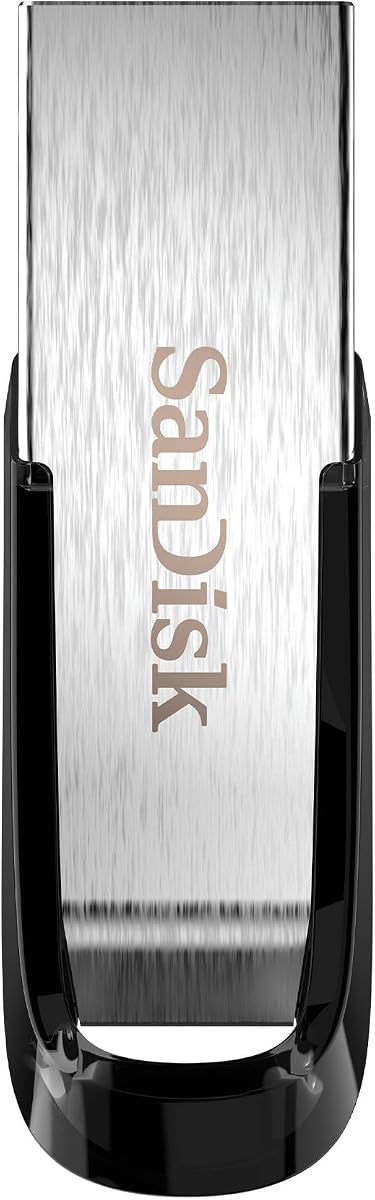
The SANDISK 512GB Ultra Flair pairs a stylish metal enclosure with up to 150MB/s read speeds, making it the fastest listed drive at the 512GB capacity tier. Its 4.6 rating suggests broad satisfaction, while the durable casing gives it a more refined appearance than a basic plastic thumb drive.
We may earn a commission when you buy through this link, at no additional cost to you.
The drive can transfer a full-length movie in less than 30 seconds under the stated test conditions, and write performance is advertised as up to 15 times faster than standard USB 2.0 drives. Password protection uses 128-bit AES encryption, adding security for private files. Backward compatibility expands its usefulness across older systems.
Its USB-A-only design is the main constraint for modern users. A USB-C adapter may be necessary with newer notebooks, and the supplied information notes that software download is required for password protection on Mac OS X v10.9 and later. Advertised transfer results also vary with the host, file attributes, and usage conditions.
Choose the Ultra Flair if you want a stylish 512GB drive for a USB-A computer and prioritize its stronger read-speed figure. It is well suited to media transfers, presentations, photo storage, and private work documents. It is an attractive mid-capacity option for users who do not need a USB-C connector.
The stated 150MB/s read speed is the highest figure among the 512GB models in this comparison. It makes the Ultra Flair a better fit than slower conventional drives for moving substantial video, photo, or project files.
A sleek metal enclosure supports both durability and a more professional appearance. Password protection with 128-bit AES encryption helps protect private content from casual access.
We may earn a commission when you buy through this link, at no additional cost to you.
The MOVE SPEED 1TB Solid State provides 1TB of capacity, up to 570MB/s reads, and up to 520MB/s writes in a dual-interface flash drive. Its 4.3 rating reflects a capable middle ground between ordinary USB 3.2 storage and the fastest performance models. It is a practical option for everyday large-file transfers.
We may earn a commission when you buy through this link, at no additional cost to you.
The USB 3.2 and USB-C connectors allow the drive to move between traditional computers and compatible Type-C mobile devices without a separate cable. A zinc alloy case and built-in heat dissipation holes are intended to preserve stable performance. The product information also identifies compatibility with several current mobile device families, smart TVs, and car audio systems.
Its maximum speeds are substantially below those claimed by the 1,090MB/s Vpro and the 1,000MB/s 2TB models. That matters for very large creative files or repeated transfers, although the drive can still be substantially quicker than conventional flash drives. Mobile-device behavior varies, so the exact model and operating system should be checked.
Choose this drive if you want one terabyte, two connectors, and solid transfer performance without stepping into the top speed tier. It suits professionals, students, and mobile users who need a capable, portable file-transfer device. For maximum throughput, the Vpro is the more ambitious choice.
Reads of up to 570MB/s and writes of up to 520MB/s provide a more balanced performance profile. This is useful when copying files to the drive as well as retrieving them.
Built-in heat dissipation holes help reduce the risk of overheating during sustained transfers. That makes the enclosure more appropriate for larger working files than a basic flash drive.
We may earn a commission when you buy through this link, at no additional cost to you.
The PNY 512GB Turbo Attaché 3 is a straightforward mobile-storage drive with up to 100MB/s read speeds and transfer performance advertised as up to ten times faster than USB 2.0. Its 4.6 rating, 512GB capacity, and straightforward construction make it a dependable option for everyday files.
We may earn a commission when you buy through this link, at no additional cost to you.
A sliding collar protects the USB-A connector without a separate cap, reducing the chance of losing a tiny piece. It is designed for large documents, videos, photographs, music, and other media. Compatibility with USB 3.2 Gen 1, USB 3.0, and USB 2.0 systems allows it to work across many computers.
Compared with the SanDisk Ultra models, its stated read speed is lower, and it lacks their security features. The single USB-A connector also limits direct use with modern USB-C devices. These are meaningful trade-offs for buyers who regularly work with sensitive files or newer portable hardware.
Choose the Turbo Attaché 3 for a simple, durable 512GB drive that is likely to spend more time in a pocket or laptop bag than at a desk. It suits students, commuters, and office users who need dependable capacity and easy connector protection without paying attention to premium performance specifications.
The sliding collar keeps the connector covered while eliminating a separate cap. That simple feature reduces lost-piece problems and makes the drive convenient to carry every day.
Support for USB 3.2 Gen 1, USB 3.0, and USB 2.0 hosts makes this a flexible option across older and newer desktop and laptop computers.
We may earn a commission when you buy through this link, at no additional cost to you.
The PNY 2TB Duo Link V3 offers an unusual combination of maximum capacity, dual connectors, and premium transfer speeds. It is rated 4.4, supports reads of up to 1,000MB/s and writes of up to 800MB/s, and provides a full 2TB of storage. It is a compelling high-capacity choice for buyers who want strong value without a single connector type.
We may earn a commission when you buy through this link, at no additional cost to you.
The Type-A and Type-C ends support transfers involving compatible phones, tablets, laptops, and desktops. The stated mobile support includes recent iPhone 15 models, newer iPads, and Android devices, although users should confirm port and case clearance. A metal swivel design protects the connectors and provides a durable, compact form.
The drive relies on compatible USB 3.2 Gen 2 hardware for its highest performance. It also lacks a stated password-protection feature, which may make it less attractive for highly sensitive information. As with all high-capacity flash drives, physically losing a device with important files is a meaningful risk.
Choose the Duo Link V3 if two terabytes, dual-interface convenience, and fast transfers are your priorities. It is well suited to creative professionals, media collectors, and frequent travelers. It also serves as a more budget-oriented alternative to similarly capacious premium drives, which is why it earns the Best Budget designation among the top choices.
Two terabytes provides enough room for extensive creative assets, offline media, project archives, and partial backups. It is a practical capacity choice for users who regularly encounter storage limits on laptops and phones.
Stated speeds of up to 1,000MB/s reads and 800MB/s writes place the drive in the high-performance category. Compatible USB 3.2 Gen 2 hardware is important for obtaining those results.
We may earn a commission when you buy through this link, at no additional cost to you.
The SANDISK 2TB Extreme PRO USB-C combines full 2TB capacity with transfer speeds stated at up to 1,000MB/s. Its 4.5 rating and modern USB-C design position it as a premium portable drive for creative files, 4K home videos, and high-resolution project assets. It is especially appropriate for users who have standardized on USB-C.
We may earn a commission when you buy through this link, at no additional cost to you.
The universal Type-C connector enables straightforward connections to compatible modern devices. The SanDisk Memory Zone app supports automatic backup, helping make regular transfers more convenient. RescuePRO Deluxe is included to assist with recovering accidentally deleted files, adding a useful recovery layer beyond ordinary copying and storage.
Because it lacks a USB-A connector, older desktops and legacy systems may require an adapter. Peak speed likewise depends on a compatible host, the size and number of files, and sustained thermal conditions. A single-connector design also offers less flexibility than the SanDisk dual-drive and PNY Duo Link V3 alternatives.
Choose this model if you want the combination of maximum capacity, premium speed, and a streamlined USB-C form. It is ideal for modern creative professionals, photographers, video editors, and mobile workers. Those needing broader connector compatibility may prefer the dual-interface 2TB alternatives.
A universal Type-C connector aligns the drive with current laptops, tablets, and compatible phones. It simplifies a modern mobile workflow and avoids carrying a dedicated adapter for every use.
RescuePRO Deluxe provides a potential recovery path for deleted files, while Memory Zone supports automatic backup. Together, they add useful management tools for important archives.
We may earn a commission when you buy through this link, at no additional cost to you.
The SANDISK 2TB Extreme PRO USB-A pairs maximum storage with high-speed performance and traditional USB-A connectivity. It carries the highest customer rating in the guide at 4.8, supports transfer speeds up to 200 times faster than standard USB 2.0 drives, and offers 2TB for large files and extensive backups.
We may earn a commission when you buy through this link, at no additional cost to you.
Its premium metal enclosure and keyring hole support everyday portability. The drive includes RescuePRO Deluxe for recovering deleted files, while 128-bit AES password protection helps secure sensitive content. Those features make it more than a simple high-capacity container for work, media, and personal archives.
Its single USB-A connector is the key compromise. Modern USB-C computers and mobile devices may require an adapter, while dual-interface alternatives would be more convenient for mixed-device use. The performance claim also depends on a compatible host, and the advertised comparison is against the much slower standard USB 2.0 baseline.
Choose the Extreme PRO USB-A if you have a USB-A computer, want the highest rated option, and need both 2TB capacity and fast transfers. It is an excellent choice for high-volume media work, legacy workstation setups, and large portable libraries. USB-C-focused users should consider the dedicated USB-C or dual-interface alternatives.
The 4.8 rating is the strongest customer feedback figure among the selected products. Combined with 2TB capacity and fast performance, it makes the drive a compelling high-volume option.
A premium metal body protects the storage while the keyring hole simplifies attachment to bags or key rings. AES password protection adds an important safeguard for valuable files.
We may earn a commission when you buy through this link, at no additional cost to you.
The right high-capacity flash drive depends on more than storage alone. Connector format, sustained speed, security, durability, compatibility, and the kinds of files you carry should all influence your decision.
Capacity is the first practical filter. A 256GB drive is suitable for essential documents, a small photo collection, and compressed media, but it can fill quickly when working with video. The 512GB models offer a more comfortable balance for larger files, while 1TB and 2TB options are better suited to creative archives, extensive media libraries, offline entertainment, and partial workstation backups. Check the usable format as well as the advertised capacity, since the operating system reserves some space and flash storage may not present the entire nominal amount directly.
In short, select the smallest listed capacity that comfortably holds your active files, backups, and near-term growth. Paying attention to capacity prevents both an overpurchase and the frustration of constantly managing full storage.
USB-A, USB-C, and dual-interface designs serve different systems. USB-A remains common on desktops and older laptops, while USB-C is increasingly standard on modern notebooks, tablets, and phones. Dual-interface drives reduce adapter requirements because both connector types are built in. Before purchasing, inspect the ports on every device you intend to use and confirm whether an adapter is acceptable. Phone compatibility can also depend on the exact model, operating system, available port, and whether a protective case blocks access.
Choose a dual-interface model for mixed-device workflows or a dedicated USB-C model for a modern setup. A USB-A drive is sensible when legacy computer support matters more than direct mobile connections.
Read speed determines how quickly files can be opened or copied from the drive, while write speed affects how quickly data is saved to it. A drive optimized for reads may be less satisfying for editing directly from flash storage. Headline figures are often maximum values under favorable conditions, and actual performance can vary with the host interface, file count, file size, controller, and temperature. None of the stated maximum speeds should be treated as guaranteed results on every device.
Prioritize strong write performance when importing footage, archiving projects, or creating backups. For reading a prepared media library, the listed read speeds are generally the more relevant comparison. Always use a compatible high-speed host for the best results.
USB generation establishes the maximum bandwidth available through a host port. Older USB 2.0 systems may limit even a high-speed flash drive to a fraction of its headline capability, while USB 3.0, 3.1, and 3.2 Gen 2 hosts can support faster transfers. Backward compatibility is common, but backward-compatible does not mean the drive will deliver its maximum speed on an older port. A USB 3.2 Gen 2 drive is particularly meaningful when paired with a computer that exposes the full interface.
Choose the generation that matches your primary computer and avoid judging a drive solely by its label. The port on the host device ultimately limits the result you can experience.
Encryption and password protection are important when a drive contains client files, financial documents, medical information, educational records, or personal archives. Some products use 128-bit AES, while the Lexar D40E specifies 256-bit AES encryption. The presence of an encryption feature does not mean it is active by default, so users should follow the relevant setup instructions. Mac support may require downloaded software, as noted for the SanDisk Ultra Flair, and a forgotten password may mean the protected content cannot be accessed.
Enable security before placing important files on the drive, and keep any recovery credentials in a separate location. For highly sensitive data, encryption is worth prioritizing over incremental transfer-speed differences.
Housing design affects durability, connector protection, and ease of carrying. Metal enclosures, such as those used by the SanDisk and PNY high-performance models, provide a robust feel, while swivel designs help protect exposed connectors. The Lexar D40E is especially compact, while the MOVE SPEED products emphasize alloy enclosures, heat dissipation, and resistance to dust, water, drops, and high temperatures. A large 2TB drive may also be more consequential to lose, making a lanyard, keyring, or dedicated pouch worthwhile.
Choose a design that suits your routine rather than assuming the most rugged-looking option is necessary. A compact metal drive with protected connectors is a practical balance for frequent travel.
Some high-capacity drives add companion software for automatic backup, file management, and retrieval. The SanDisk Extreme PRO Dual Drive uses the SanDisk app for those functions, while the USB-C Extreme PRO supports Memory Zone auto-backup and includes RescuePRO Deluxe. Recovery software can be valuable after accidental deletion, although it is not a substitute for maintaining separate backups. Check whether an application requires a download, which operating systems it supports, and whether you are comfortable granting software access to removable storage.
Use backup tools to create additional copies, but do not treat the flash drive itself as the only copy of irreplaceable files. Recovery features are best viewed as a safety net rather than guaranteed restoration.
Before transferring important files, format the drive using the file system recommended by your primary devices. ExFAT is often the most flexible choice for moving large files between modern Windows and Mac systems, while NTFS may be preferable when the drive is used mainly with Windows. Confirm the connector type, insert the drive directly, and wait for the operating system to recognize it before copying anything.
Transfer one important backup first, open several files, and verify that they remain accessible before moving large collections. Avoid interrupting the operating system's eject process, and do not pull the drive out while files are still writing. Ejecting it properly reduces the chance of corrupted directory information, incomplete transfers, and lost work.
Treat the drive as a portable storage device rather than a permanent vault. Keep it in a dry place away from extreme heat, moisture, magnets, and physical impact, and use a protective case when carrying it. Periodically check important files on a computer, maintain another copy of irreplaceable data, and use encryption or password protection whenever confidential information is stored on the device.
The largest capacity listed is 2TB, offered by the SanDisk Extreme PRO Dual Drive, SanDisk Extreme PRO USB-C, SanDisk Extreme PRO USB-A, and PNY Duo Link V3. A 2TB drive is most useful for large media libraries, creative project files, and substantial offline archives. It remains smaller than many external SSDs, but its compact flash-drive format offers greater portability.
A 2TB model is better when you routinely exceed 1TB or want more room for future growth. It is particularly helpful for video files, project archives, and local backups. A 1TB drive may be sufficient for general documents and media, and the smaller capacity can make the device easier to manage and carry.
Most of the listed drives are backward compatible with USB 2.0, so they can usually be inserted into an older computer. Their maximum transfer speeds will not be available on a USB 2.0 port, however. You may also need an appropriate adapter when connecting a USB-A drive to a USB-C-only system.
The host port, connection type, file size, number of files, device temperature, and drive controller can all reduce observed performance. The supplied figures represent maximum stated conditions, so a USB 2.0 port or a mobile device may deliver a much lower result. Large, fragmented file collections can also transfer more slowly than a single large file.
Several products specifically list compatible current mobile devices, but support depends on the exact phone model, connector, operating system, and available storage-port access. The SanDisk Extreme PRO Dual Drive, PNY Duo Link V3, and MOVE SPEED dual-interface models are designed with USB-C mobile use in mind. Check the product details and your device requirements before purchasing.
Choose a drive with built-in encryption or password protection, and enable the feature before adding confidential files. The Lexar D40E specifies 256-bit AES encryption, while several SanDisk models offer password protection using 128-bit AES. Keep recovery information somewhere secure and maintain a separate backup in case the device is lost or the password is forgotten.
They can be useful for portable or temporary backups, especially when a large amount of data must be moved between locations. They should not be the only copy of irreplaceable files because removable storage can be lost, damaged, or fail. Use a flash drive alongside another backup method and verify transferred files regularly.
No. Capacity and speed are separate characteristics, and performance also depends on the USB generation and controller inside each model. Some 2TB drives reach 1,000MB/s, while a 512GB model can have a lower maximum read rate. Compare both capacity and the separately stated read and write specifications for your needs.
The strongest all-around choice is the SANDISK 2TB Extreme PRO Dual Drive because it combines maximum storage, dual connectors, premium transfer speeds, metal construction, and backup software. The PNY 2TB Duo Link V3 provides a budget-focused alternative with similar capacity and headline performance, while the SANDISK 2TB Extreme PRO USB-C delivers a streamlined premium experience for modern USB-C workflows.
Prioritize capacity for large creative collections and backups, dual interfaces for mixed devices, strong write speed for frequent imports, and encryption for sensitive files. Smaller 256GB and 512GB options remain more appropriate for everyday documents and portability. Before buying, verify the exact connector requirements, host speed, operating-system support, and whether the advertised capacity provides enough breathing room for future files.
Product availability, ratings, specifications, and prices can change, so check the current listing and recent customer feedback before making a final purchase. Use the included link to review the latest product details, compatibility information, and current offer, and keep a separate backup of any files that cannot be replaced.